Tag Archives: HK

Water Kills

Continuing my series of posters that freak me out on the MTR (so far we’ve had hands emerging from eye sockets, prawns stuffed in pizza crusts and kids dressed as sperm purporting to teach us nutritional values), here’s torture-porn specialist Jigsaw suspended in some modestly-named COOL water.

Now I know there’s a promotion for free tickets going on, but do we really think the best way to market healthy refreshing distilled water is to have a serial killer’s head floating around in it? Bring back the children dressed as sperm! All is forgiven!

798 Unit & Co Gastropub restaurant review – rub-a-pub-grub

UPDATE: 798 is now closed.

Whilst Hong Kong seems to be getting the hang of pubs (Dickens, Delaneys and Trafalgar are all worth a punt and I’ve heard good things about The Globe… just don’t head to The Pickle & Pelican if you value your stomach), gastropubs are proving a bit more difficult for HK to get its head round.

I’m not looking for a Heston Blumenthal experience. For me, a gastropub means a bit of a fancier setting, a bit of a fancier menu (featuring regular pub grub but with a few twists) and an elevation in the quality of the food. I don’t think I’m shattering many illusions when I divulge that most standard pubs in the UK are operating an only slightly superior variant on “pinging” supermarket ready-meals, especially as many are now run by cut-and-paste chains. With a gastropub, I’m expecting fresh ingredients, some element of cooking as opposed to just sticking something in an oven and an environment that isn’t coated in sticky beer stains. Of course, with such benefits comes a hike in prices – but within reason!

So whither gastropubs in HK? The Pawn isn’t far off the mark, but it’s a la carte menu is just too pricey. I would classify Jimmy’s Kitchen’s menu as pure gastropub, but its staff and its prices seem to be under the illusion that it’s a Michelin-starred restaurant. Frites (run by Concept Creations, who also own the fabulous Tapeo) has the environment down pat, top-notch food, a quality beer selection and would perhaps rank as a gastropub – in Belgium. Good luck looking for a lasagne there! As such, 798 Unit & Co. Gastropub is probably your best bet.

The environment is perfectly-judged. Looming chandeliers on lofty ceilings, chunky dark-wood furniture and squishy sofas, blackboard menus and other quirky little touches. Food is served in hearty, hefty portion sizes, which should be a given in a gastropub.

As for the food, the lunch menu (available between 12-3pm) is spectacularly good value. $88 for three courses plus a drink is fantastic, especially given that you’re in a Western restaurant in the typically pricey Times Square in Causeway Bay (compare with The Pawn, $150 for three courses sans drink). They also do even cheaper sets if you fancy a salad ($78) or sandwiches/pizza ($68).

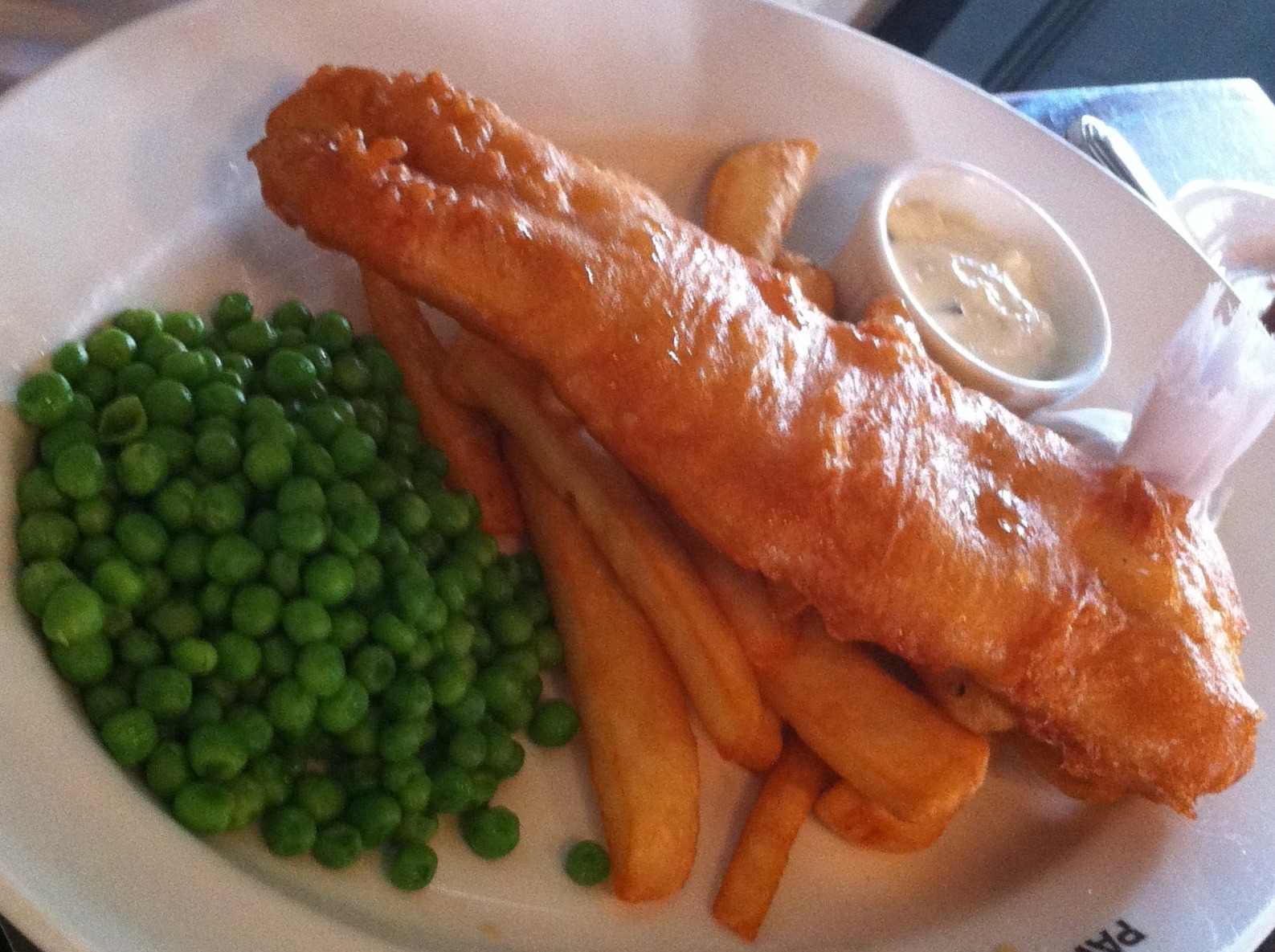
All this would be meaningless if the food was rubbish. But it isn’t. For my money, 798 does the best fish and chips in Hong Kong. That’s not a claim to be taken lightly but here’s the evidence. It comes wrapped in faux newspaper. This isn’t just a tacky design thing – it helps soak up the grease! So many restaurants here seem unable to comprehend this simple fact and serve you a fish sliming about in its own oil, a sad but inevitable by-product of deep-frying things. It’s served with a load of side condiments, including vinegar, which you could be forgiven for thinking is a prohibited ingredient out here (alas, not Sarsons Malt but red wine vinegar, still better than nothing).

You get a full fillet of fish, not a few strips, and said fish is moist, creamy but still flakes apart expertly. The batter is golden, crispy and has an actual taste (there may be beer involved), as opposed to the anodyne floury sometimes herby stuff most places do. The chips are steak-cut, golden, fluffy on the inside, crispy on the outside. I believe one of the main reasons chips in HK often suck is due to the quality of the spud (have you seen the sad specimens at the local wet market?!) but these ones have a yummy nutty flavour to savour.

[For those interested, I’d rank it alongside The Pawn’s extremely good version in terms of taste but it beats it in terms of presentation and price, even in its a la carte incarnation. And it pisses all over The Chippy from a great height.]

As for the rest of the set, starters are either soup or salad of the day. The rabbit food was underdressed but their soups are lovely. They taste homemade, as if they remembered being a fresh vegetable recently rather than in some dim and distant lifetime. The cauliflower soup was a little watery (a common problem in homemade soups) but the intense flavour came through nicely. It would be nice if you could use some hunks of bread to soak it up but I find 798’s wedges more suitable to propping up wobbly table legs rather than eating.

My auntie went for spaghetti for her main. Here we get a typical ‘gastropub’ twist – the ragu was made with lamb rather than beef. This works better than one of their other twists (for me, the taste and texture of duck just does not work with the taste and texture of lasagne, ok!) and the lamb was sweet, succulent and tender. And there’s lots of it. (I hate when you run out of meat in a pasta, and to keep costs down, it happens quite a lot out here). It’s balanced by a richly appetising ragu, with a heady hit of wine to boot!

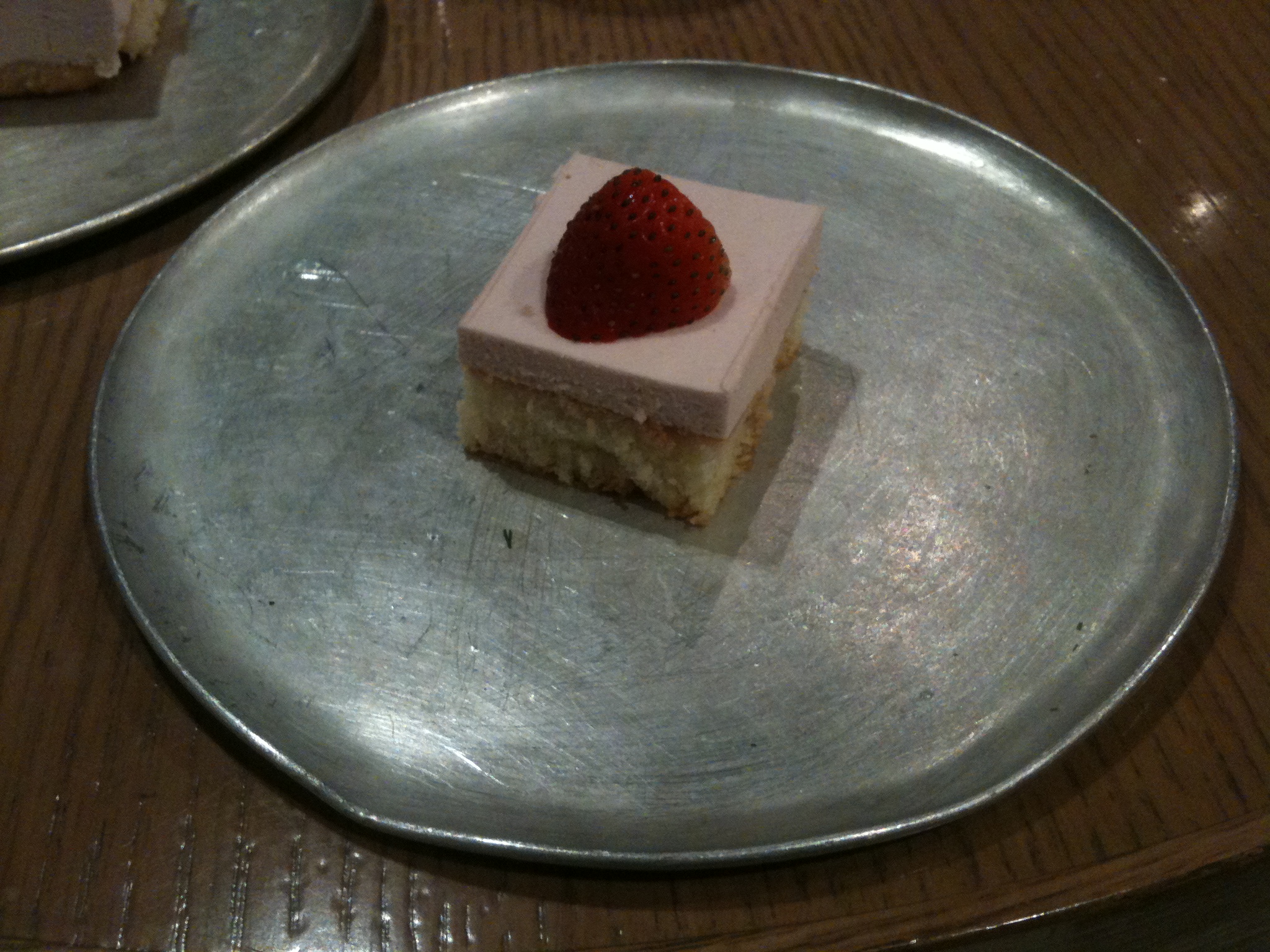
No choice for dessert – you get the dessert of the day, although for $20 you can upgrade to an a la carte choice (which are uniformly scrumptious btw). Given the heavy main portions, it’s kept short and sweet. That day, it was a strawberry mousse cake – light and airy mousse, light and airy sponge, topped with a juicy fresh strawberry. Fragrantly sweet rather than overpoweringly so, it’s nothing groundbreaking but goes down a fluffy dreamy treat at the end of the meal.

Any future gastropubs opening in HK would do well to examine 798’s template. No molecular gastronomy, just good honest food at good honest prices. Just try and make it there in time for lunch!

Shop 1203, 12/F Food Forum, Times Square, Causeway Bay, Hong Kong, 2506 0611

Restaurant photo from 798 Unit & Co’s website.

Hong Kong Zoological and Botanical Gardens: Green there, done that

It’s a nice day, you’re unemployed and at a loose end. What to do that’s cheap, interesting and actually involves leaving the house? How about a trip to Hong Kong’s Zoological and Botanical Gardens?

Admittedly, now probably isn’t the best time of year to visit as most of the 1000 plus species of plants are no longer flowering. Yet given it was an absolutely beautiful summer’s day and I wasn’t sure if we’d be having any more of those this year, my boyfriend and I decided to make the trip to Central and have a calm and gentle stroll around.

Trek not helped by The Stairs To Nowhere. HK Planning Department Fail.

Of course, we forgot that beautiful summer’s day = getting hot and sweaty. Especially as it’s a bit of a trek to get there, much of it uphill, and one problem of an open-air park is that there isn’t a blast of cool air-conditioning to welcome you there! (I still think the LCSD is missing a trick by not making its museums and parks have proper restaurants and cafes. It’s something many places in England have done, making them destinations in their own right. But most places I’ve visited in HK make do with an amateur-run eaterie, akin to the school cafeteria, with plastic chairs, dishing up instant noodles – and that’s on a good day! HKZBG was no exception, sporting a few fast food kiosks. Given the number of young families and yummy mummies visiting, I think a beautiful café could make a killing here). However, it’s still a lovely place, especially since this spot of lush verdant greenery is nestled right in the heart of Central’s towering skyscrapers.

The Hong Kong Zoological and Botanical Gardens is one of the oldest of its kind around the world, with construction starting in 1860, opening to the public in 1864. The pagoda inside is the oldest structure in the garden and there are a few other historical statues, like a bronze one of King George erected to commemorate the 100th anniversary of British colonial rule in HK and a memorial arch as you walk in dedicated to British and Chinese soldiers who died in the war. I was also surprised by how many animals there were, an eclectic bunch of simians, reptiles and around 400 exotically-plumaged birds.

But I was here because I missed green stuff. I missed plants. I missed grass. I missed trees and shrubs and my garden. I missed walking around in green spaces, breathing in fresh air and being a bit removed from the rumble of pollution and the smog of concrete. So most of my pictures are of that. Enjoy. (As ever, click to enlarge). And yes, I will be going back in Spring.

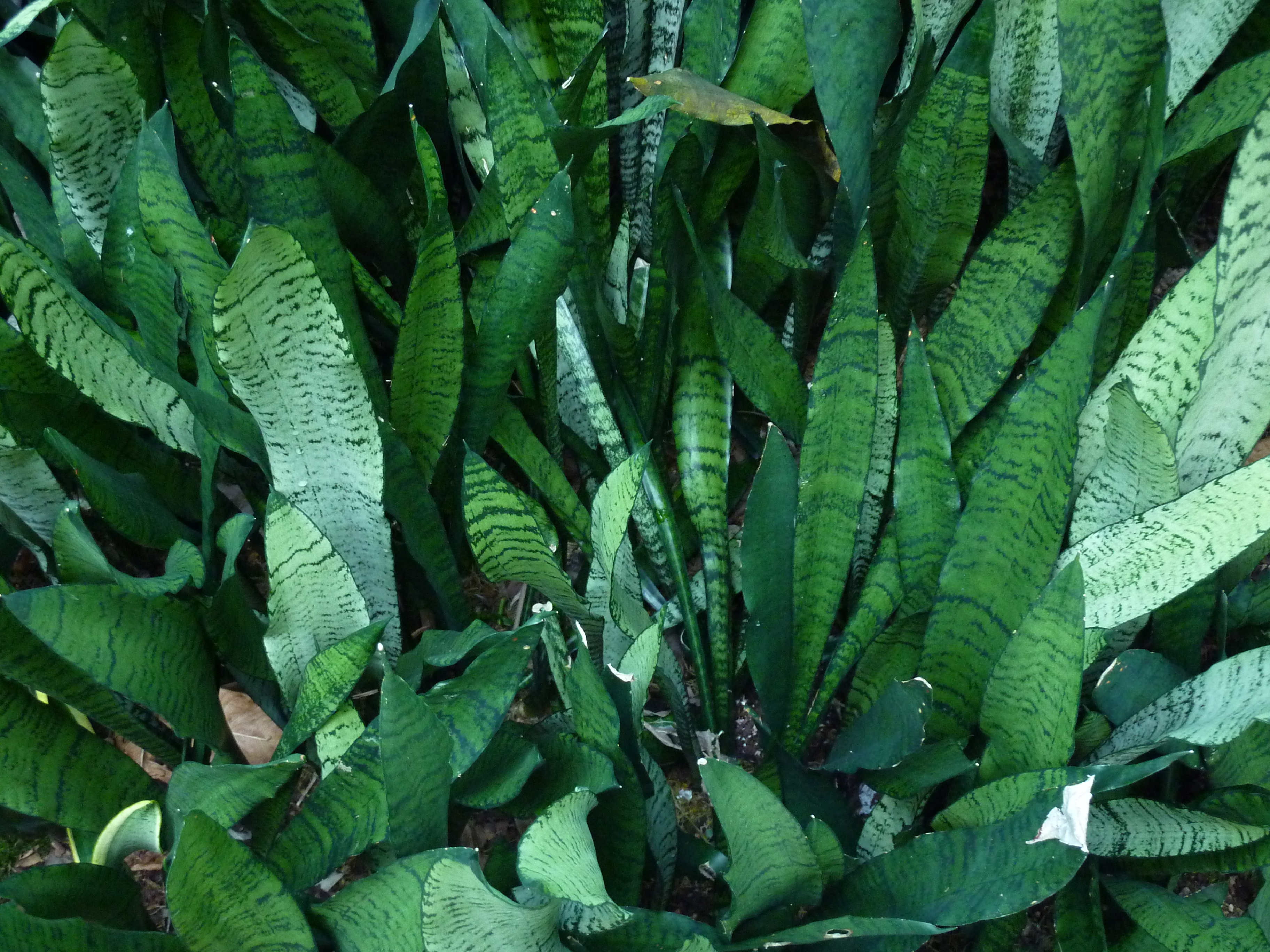
This plant was called mother-in-law’s tongue! *Insert mother-in-law joke here*

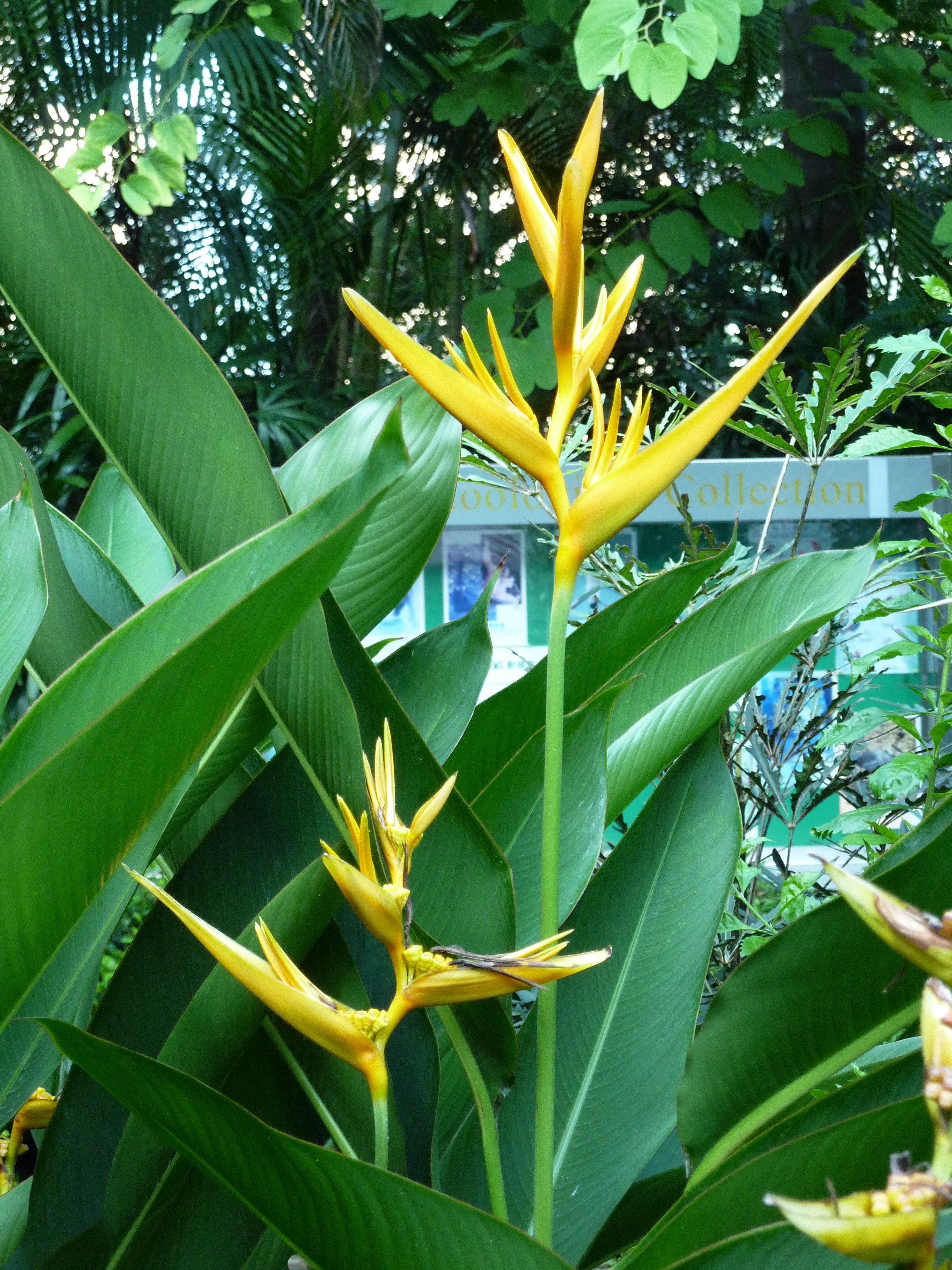
Some form of Heliconia, also known as ‘false bird-of-paradise’. You can see why! Birds-of-paradise were always my favourite house plant in Sims!

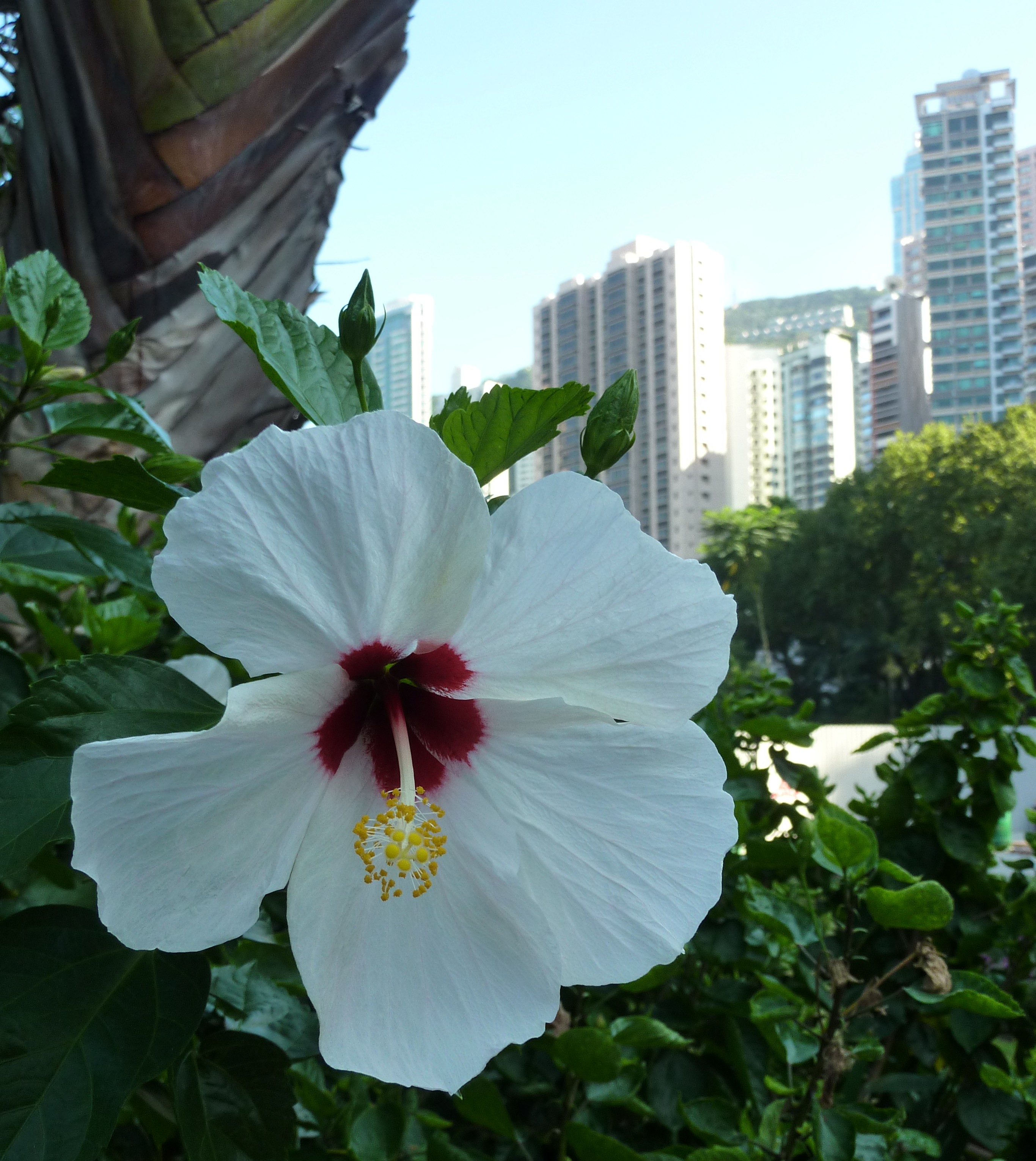
Another hibiscus – not HK’s national flower, but it might as well be.

I want to call these catkins. They might not be but whatever, it still reminded me of my Flower Fairies books.

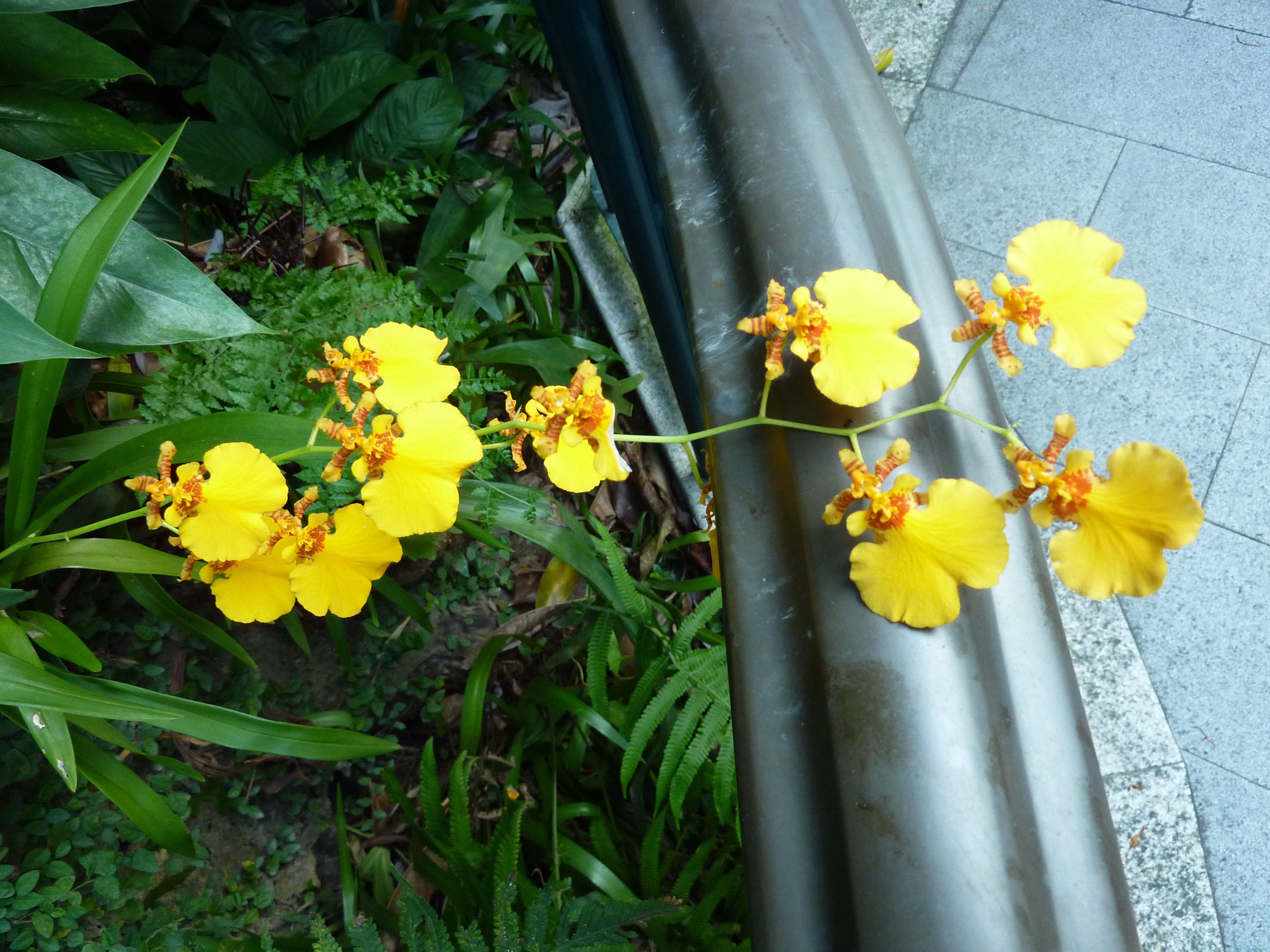
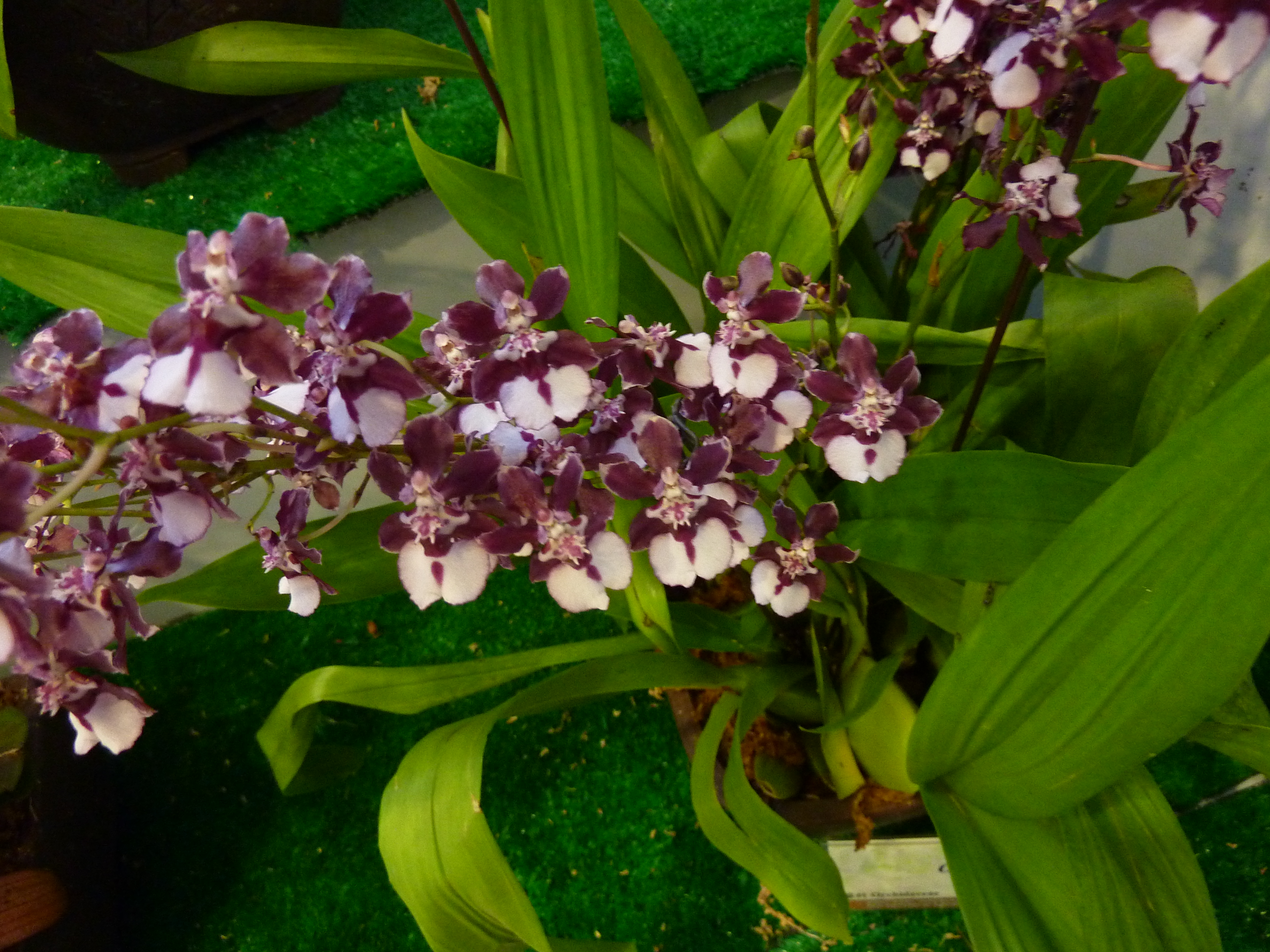
The Education and Exhibition Centre currently houses a display of orchids. Most were fairly standard (or as standard as orchids ever can be!), like those at CWB’s Flower Market but these were unusually beautiful.

I thought these tree roots were amazing – like a labyrinth or a witch’s hand! Better than any modern art sculpture!

Hong Kong Zoological and Botanical Gardens, Albany Road, Central, 2530 0154. Free admission. Fountain Terrace Garden (the fountain was closed when I visited!), open 6am to 10pm. Green House and Exhibition Centre, 6am-4pm. All other areas, 6am-7pm.

Get a bus or get the MTR to Pacific Place, Admiralty. Go up the escalators at the side by Grappas and Lane Crawford to Hong Kong Park and follow the signs to the HK Zoological and Botanical Gardens.

The Pawn restaurant review – the Pawn identity

UPDATE: The Pawn has since been renovated with an entirely new menu!

So we’ve talked history, we’ve worried about heritage and we’ve waxed lyrical about the views – but what about the restaurant itself? Well, it’s safe to say that The Pawn acquits itself fairly nicely on the food front as well.

So what does The Pawn have in common with The Press Room Group’s other restaurants (The Press Room and SML)? Amazing attention to detail, that’s what. Part of what makes all three of those places real dining experiences is that no expense has been spared on the décor, the ambience and the little niggly things that all contribute to giving you a great feeling about eating there. Consequently, The Pawn makes the most of its old shophouse setting – airy high ceilings, balcony seating, long iron-grilled windows and decoration that totally fits with the simple grandeur of the place.

It feels like a comfy dining room. Not a posh snooty one where you daren’t clatter your cutlery, not the one in your gran’s sitting room with the conked-out sofas, but somewhere nice in-between. The chairs are proper rustic wooden dining chairs, with embroidered cushions and arts and crafts style engravings, but all slightly different so it’s obvious they weren’t just bulk bought from Ikea. There are strips of beautiful bespoke floral wallpaper (designed by HK artist Tsang Kin-Wah) that, when viewed up-close, is basically pretty graffiti. There’s lots more honest brown furniture that feels old without feeling ancient, like it had a life before The Pawn rather than being created especially for it, whilst the famous HK pawnshop symbol recurs throughout, on their personalised crockery, restored on the wall outside and even on the platter that your bill arrives on. Add a few Hong Kong touches, like simple dangling plastic ceiling lamps and views over bustling Wan Chai with the audible dinging of passing trams and you have beautifully-executed design that’s obviously had hours of thought poured into it but that still feels relaxed and unobtrusive, rather than fake and try-hard. As you may be able to tell, I loved it.

Meanwhile, the menu is pure British gastropub. Ham hock, bone marrow, liver, hearty portions of red meat and mash in various guises, sticky toffee pudding, apple crumble… but all posh-ed up, with modern chef-y twists and served in a becoming manner, hence just about justifying charging $180 for a plate of fish and chips.

The lunch deal, however, is pretty amazing. $150 for three generously-sized courses of such quality is fantastic value and bizarrely, cheaper than ordering any single main from the a la carte menu.

I started things off with pumpkin and ginger soup, definitely only suitable for those that don’t mind their soups being sweet. Despite it being part of the set, I was pleasantly surprised to see that they hadn’t stinted on portion size and despite it being a piping hot day, I was pleasantly surprised that my piping hot soup still felt summery. It was rich, thick and creamily sweet and I loved the warm fuzzy kick that the ginger gave. There were also two glazed crispy toast type things providing a snappy crunch that complemented the soup perfectly.

Onto my main of Dover sole, with a lemon butter sauce, mash and assorted leaves. When my boyfriend tasted it, he commented ‘The sauce is the best thing on there.’ He was absolutely right, begging the question: why wasn’t there more of it?! One of my pet hates (can you tell I watch too much Masterchef?!) is when sauces are dribbled about for artistic effect rather than actual consumption. Yes, it looked pretty, but it tasted even better and I wanted more! My fish was nicely-cooked and, combined with what little drizzle there was, tasted lightly lovely, but the mash was oddly cold and there was too much of it (a problem endemic with mash in general). And, to me, leaves will always be just leaves.

My boyfriend had the fish and chips. I tested the waiter was genuinely curious and asked what type of fish it was – sole again, apparently. Given how thin sole is, chef did well to fry this without making it dry and flaky. It was soft and moist, coated in golden crispy batter that was just about the right thickness. We knew it’d be a good ‘un when my boyfriend stuck his knife in and it crackled and crunched nicely! The boring peas would have been better as mushy peas, with some appropriately chef-y twist like mint and again, the overall portion was huge. But the chips were the star. In Hong Kong, you’ll get served a lot of supposed chips, with very few of them equating to anything like a British chip. French fries, frites, wedges, criss-cut, curly, julienne, slightly fatter frites but still definitely not chips, very obviously formerly-frozen chips out a bag – we’ve seen it all. These chips were the real deal. Reassuringly fat, crispy on the outside, meltingly soft on the inside, piping hot and made from quality spuds, they were just about the closest I’ve come to real chips so far in Hong Kong. Steak-cut slabs of gold.

Finally, dessert. Otherwise known as heaven. It was a banana walnut cake with toffee sauce, which I was ordering mainly for the toffee sauce, hoping it would be similar to the a-maz-ing butterscotch sauce in SML’s profiteroles. I don’t even like banana walnut cake… I’m now banana walnut cake’s biggest fan. Often, banana can be an overpowering presence but here it was a pleasant fruity undertone and the earthy flavour and crunch of walnuts ran through the cake, in addition to some very Chinese candied walnut clusters on the top (often seen as appetisers in Chinese restaurants). The sponge was light and I’d practically scoffed it all before I realised I’d started. But oh, the toffee sauce! I’m in raptures just reliving it now. Sticky, gooey, dark, rich, sweet, syrupy caramel. I would have licked the plate clean if I could (and as you can see, I gave it a good go with my spoon!). My boyfriend kept catching me give little gleeful grins as I set about demolishing it; I think I was hugging myself with delight by the end. Imagine the infamous scene from When Harry Met Sally and you’re probably not far off.

So yes, the prices are a little steep. Yes, the food is not really aiming at Michelin-starred ingenuity. And yes, you’re paying as much for the atmosphere as for the ingredients. But for a special occasion, a luxurious lunch or just because you fancy treating yourself, I think it’s worth it. And if you really can’t stretch to it, just shimmy up to the roof garden instead!

The Pawn, 2F, 62 Johnston Road, Wan Chai, 2866 3444

Banner photo from Urban Renewal Authority’s website

Pawn Again: views from The Roof Garden @ The Pawn

When I used to work in Wan Chai, my colleague and I used to dawdle about the streets until the dying seconds of our lunch hour, bemoaning the lack of pleasant public spaces in the area where we could sit and avoid returning to the office for as long as possible. Little did I know that one such place did exist and could have saved us from being harangued by strippers and grimacing over grotty tattoo parlour displays in the streets of WC.

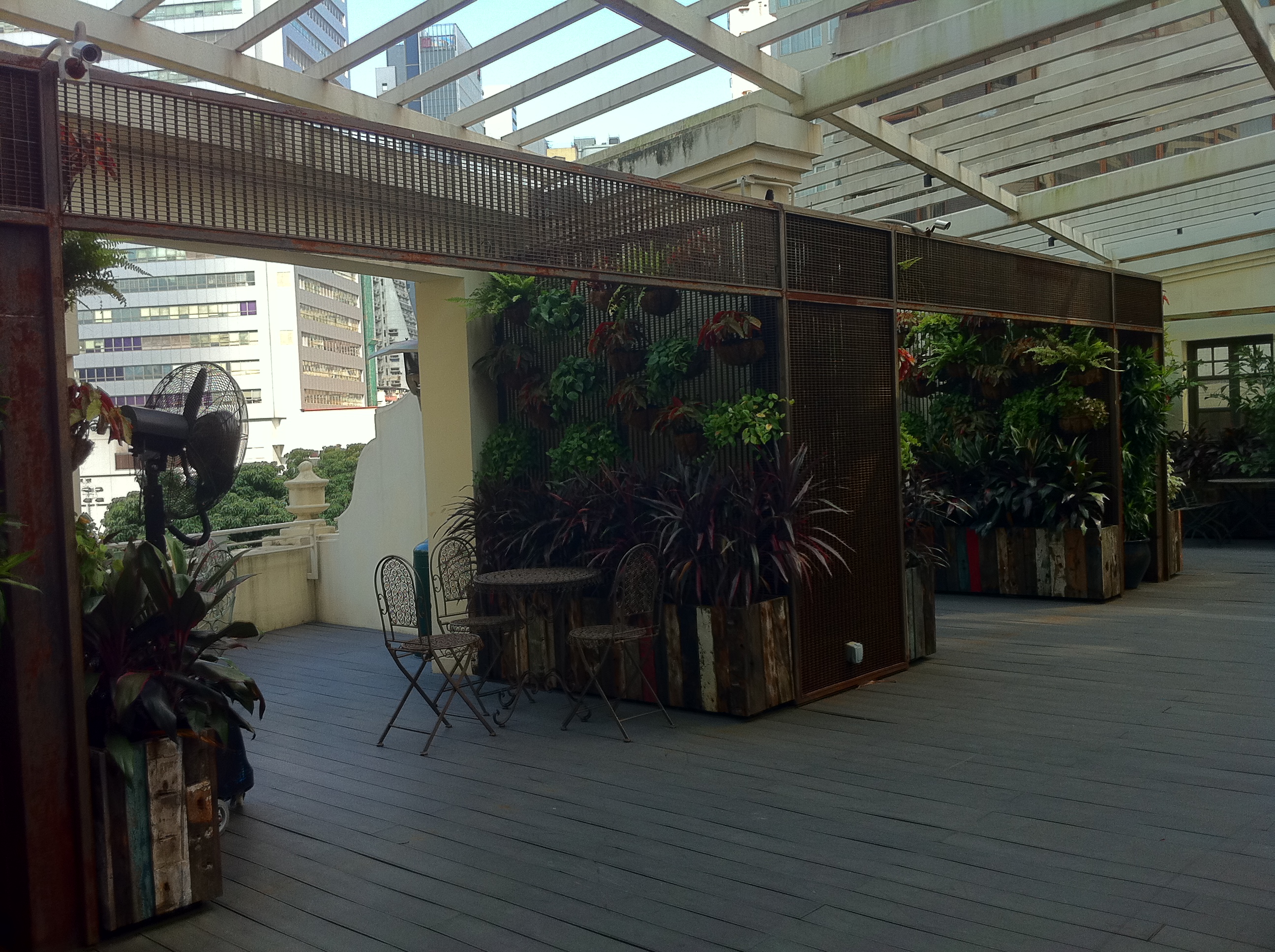
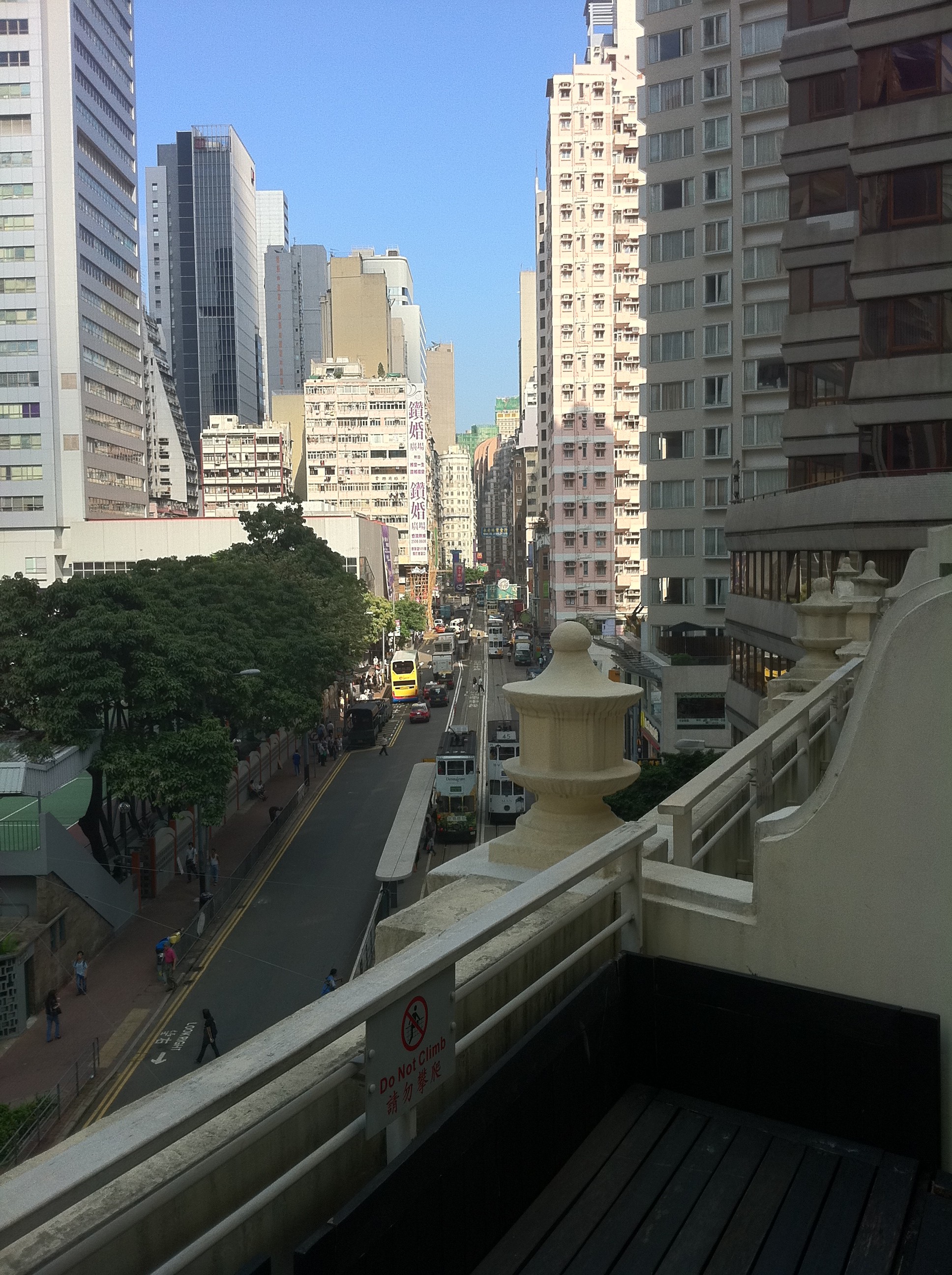
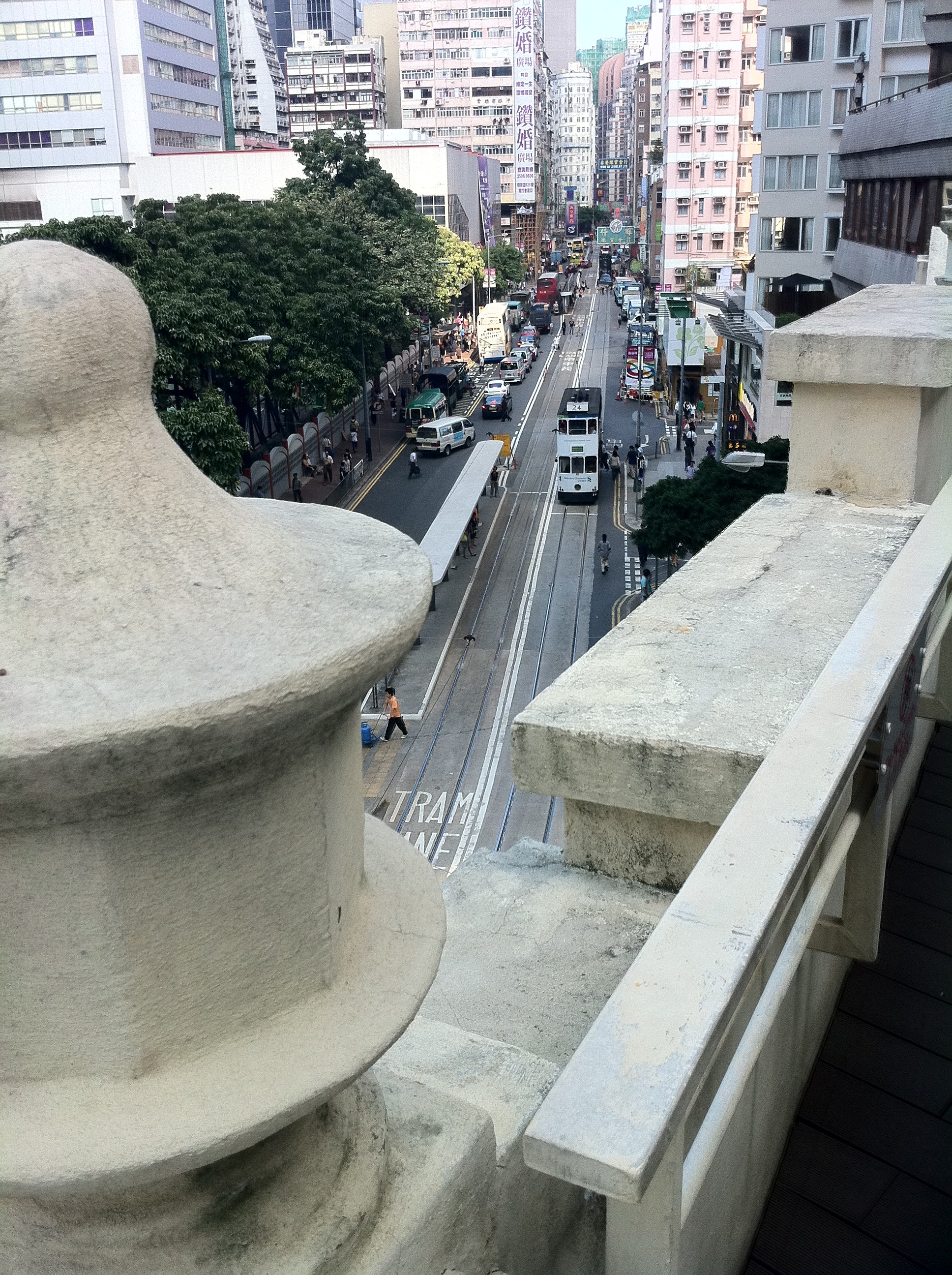
The Roof Garden (and yes, those are real plants and they’re gorgeous), on the third floor of The Pawn restaurant, is a quiet haven from the heaving hubbub of Wan Chai. It offers spectacular views over the city, a chance to drink in the different styles of architecture and savour the fact that somehow, a little piece of old Hong Kong has been preserved. Admittedly, preserved by becoming a set of swanky restaurants, but preserved nevertheless.

Photo contrasting the old Woo Cheong Pawnshop with the new development, from HK Man’s Flickr, which you need to check out like, now. Hundreds of amazing photographs like this comparing old and new HK.

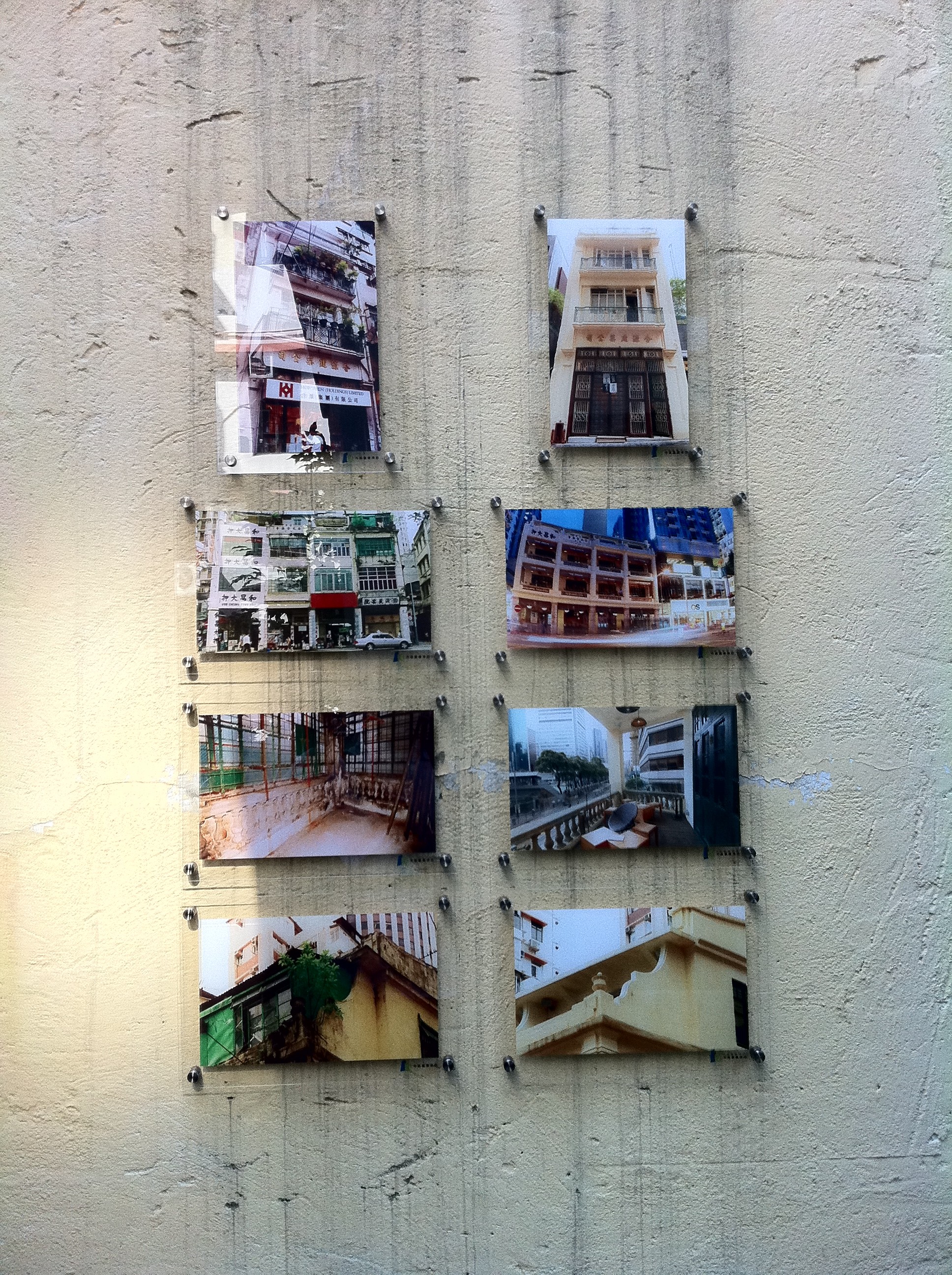
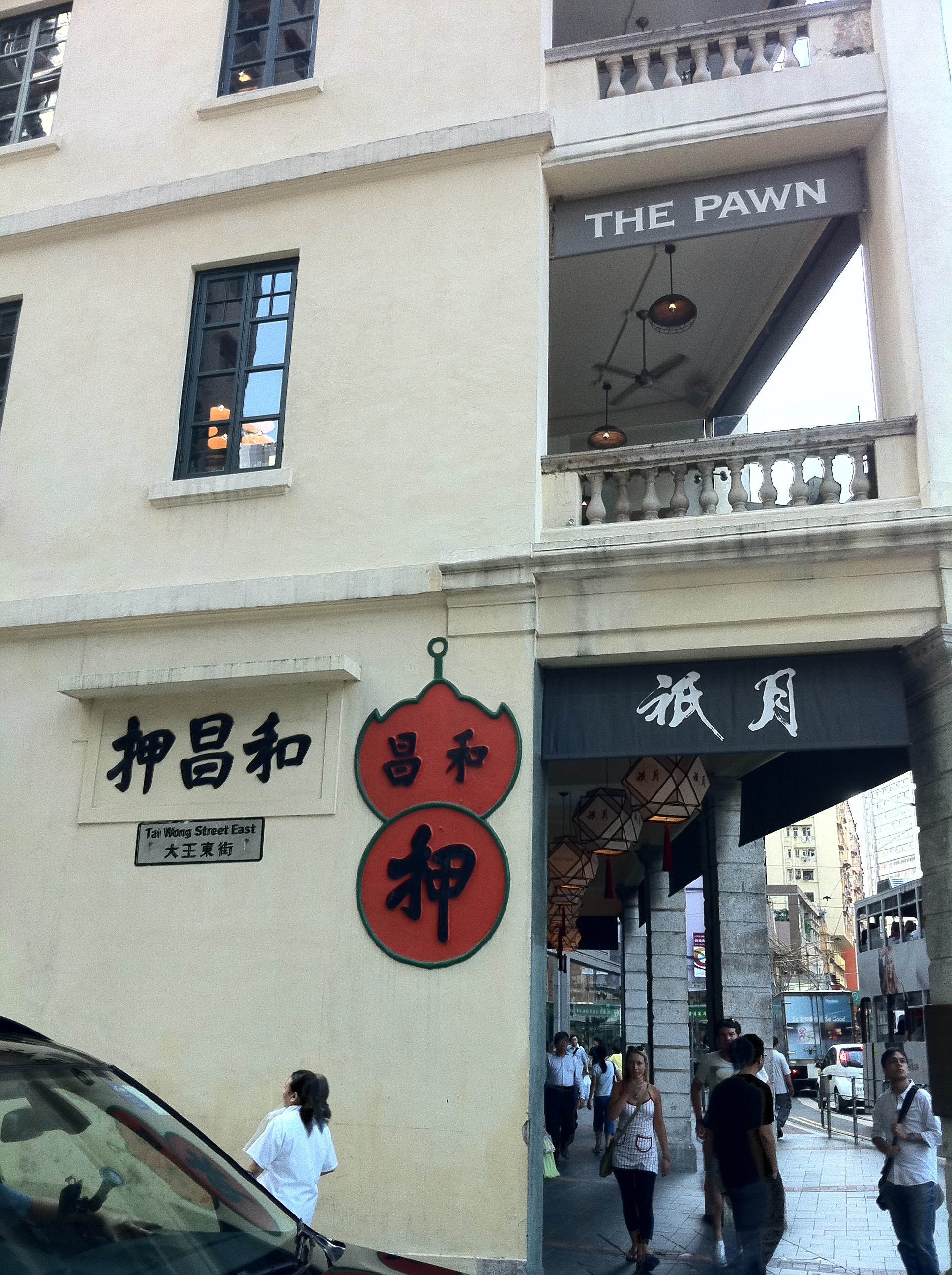
The Pawn occupies the former premises of century-old Woo Cheong Pawnshop (hence the name), a set of four tenement houses (known as “tong lau”) originally built around the turn of the 20th century. “Tong lau” were unique to Hong Kong and Southern China, balcony-type shophouses featuring a mixture of Chinese and Western architecture, where the ground floor was usually devoted to a family business whilst the upper levels were residential. These ones have four stories, with high ceilings, French windows to the balconies, verandahs facing Johnston Road and other typical Tong Lau features that you can see in some of my photos, like the balustrades and decorative urns on the roof, which have been restored and revitalised. Columns on the ground floor supported the upper levels, forming a covered pedestrian arcade – a feature more HK buildings today could do with, saving us from the beating sun and dripping air cons!

Another nice little detail – the shophouses did not have toilet provisions. Instead, the “nightsoil” was collected by government scavengers at night from the pail latrine (i.e. a bucket). How do I know all this stuff? Well, upon visiting the Roof Garden, you’re met by an attendant from the Urban Renewal Authority (who bought the building in 2003 and helped restore it), bearing a pamphlet snappily entitled “Welcome to The Pawn Roof Woo Cheong Pawnshop Building Cluster”, full of such interesting facts and photos! Apparently, this was a response to The Pawn not exactly encouraging non paying-customers to enjoy the Roof Garden but I certainly had no such problems on my visit. Sadly, the attendant didn’t speak much English so couldn’t answer any of my other questions – like whether some of the racks on the roof were actually from the Woo Cheong Pawnshop itself (they definitely looked rusty enough!).

The preserved terrazo front sign for Woo Cheong Pawn Shop

It’s easy to get frustrated with Hong Kong’s attempts (or lack of) at historical preservation. Many old buildings have ceded to anonymous modern developments already and it always seems to be an uphill battle to prevent sites of historic interest from being ripped apart and swiftly following suit. Although it isn’t exactly ideal that these century-old tenements have survived as a luxury commercial development sold to the highest bidder (with Woo Cheong shunted out elsewhere in Wan Chai to make way for them), I’d rather concentrate on being happy that it’s survived at all, that a stunning part of it is easily and freely accessible to all and that The Pawn has put real effort and thought into making the most of its setting and history (review of the restaurant itself here!).

[And what with The Press Room Group paying homage to the pawnshop, having previously done so with The Press Room itself (its name references the Overseas Chinese Daily News / Hua Qiao Daily newspaper, the 1920s residents of that building), perhaps they’re getting a taste for this kind of thing?!]

View showing the orange lift going up the side of the Hopewell Centre, which at the time of its completion (1980) was the tallest building and first circular skyscraper in Hong Kong

As for the Roof Garden – well, the pictures speak for themselves, don’t they? (As ever, click for enlargements.) It’s a spot of serenity with absolutely breathtaking views and a humbling sense of heritage. (And it would be absolutely great for a private party as well, they have a bar and everything!) There is also a small computer screen attached to one of the columns downstairs as part of the Wan Chai Heritage Trail (quite how it hasn’t been carted off by some hobo yet I’m unsure) which details some of the history of the area – including jaw-dropping maps showing how much land has been reclaimed. Basically, I’d have been standing in the sea!

Amazingly, we also had the place all to ourselves for the entire duration of our visit – so get yourselves down there before everyone else gets clued in and savour this hidden oasis set in the midst of our concrete jungle.

Ding-ding!

Photos showing the redevelopment and restoration

The instantly-recognisable HK pawn shop logo. Wikipedia reckons it represents a bat (signifying fortune) holding a coin (signifying benefits). The character in the middle is the symbol for pawn shop, the two upper characters the name of the family who own the shop.

Roof Garden, 3/F The Pawn, 62 Johnston Road, Wan Chai.

For more information and photographs about the restoration and preservation of 60-66 Johnston Road, check out the Urban Renewal Authority’s website here.

Little Sheep, HIPOT, Mou Mou Club and Gyu Yin hotpot restaurant reviews – top of the pots!

Is it wrong that I define my seasons more by food than the colour of leaves on trees? If summer’s all about salads, ice cream sundaes and sizzling barbeques in the sun, then the arrival of autumn makes my mouth water over the prospect of hearty stews, heart-warming curries and now I live in Hong Kong, hotpot.

In England, hotpot is normally of the Lancashire kind, filled with day-long baked mutton, root vegetables and lashings of gravy. But any Brit wandering into a Chinese hotpot restaurant expecting more of the same will be in for a shock!

As with most of the best Chinese eating experiences, having a hotpot is best done as a communal experience. As many people as possible gathered round a steaming pot of stock into which goes… nearly any type of food you can think of! Seriously, we aren’t fussy. Meat, fish, seafood, veggies, dumplings, tofu, noodles… if it can be cooked, chuck it in! And if you aren’t too sure… well, chuck it in anyway!
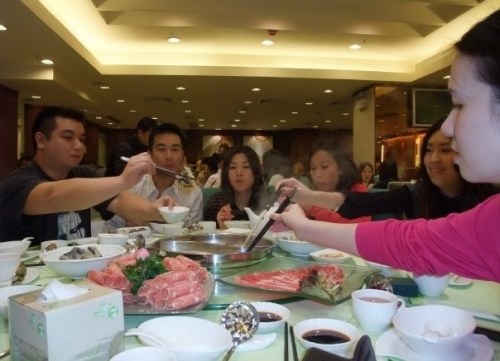
Everything comes dished up to you raw and it’s down to you to do the cooking by submerging the items in the boiling soup base. Consequently, all the meat is sliced see-through thin and the fattier, the better to keep it as tender as possible. [As someone who’s lived my life picking all traces of fat off my meat, this came as a bit of a shock but trust me, it cooks beautifully and doesn’t go rubbery or chewy as you might expect.] You also get a choice of stock, from the bland to the spicy, and different sets of chopsticks for handling raw and cooked food (although I’m terrible at remembering to do this as I’m in such a hurry to get the grub in my gob). No need to painstakingly let the waiter know your dietary requirements or your life-long hatred of fungi – if you don’t want it, don’t cook it. Simple as that.

The most traditional hotpot restaurant I’ve been to is Little Sheep, a franchise so huge that you can even buy their own branded hotpot stock from supermarkets. Here, the huge metal pot is sunk into the middle of the table with a Lazy Susan round it, so everyone mucks in, cooking bits either for themselves or leaving them to stew for communal consumption! It all gets a bit hot and steamy so they even put covers over your chairs (and coats hanging on the back of them) to prevent you getting too much hotpot vapour on your stuff!
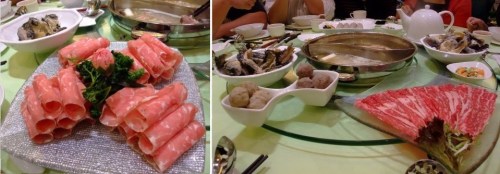
This place has a banquet feel and is definitely one for parties or family gatherings. As a result, there were masses of beautifully-presented items to choose from – my favourites were the huge variety of different meatballs and these amazing tofu spheres that started out crispy (like latticed batter) but once submerged, collapsed in on themselves to become a gooey delicious mess. The best thing is that even though you only have one pot between everyone, it’s divided into two sections so you can get two different soups going on – especially useful if you’ve got some spice fiends and others that spontaneously combust on the sight of the stuff. We seemed to have endless platters of food arriving and in the end, it only came to about $100 each. The meat if top quality and apparently, staff sometimes answer the phone ‘Baaa! I’m a little sheep!’ What’s not to love?

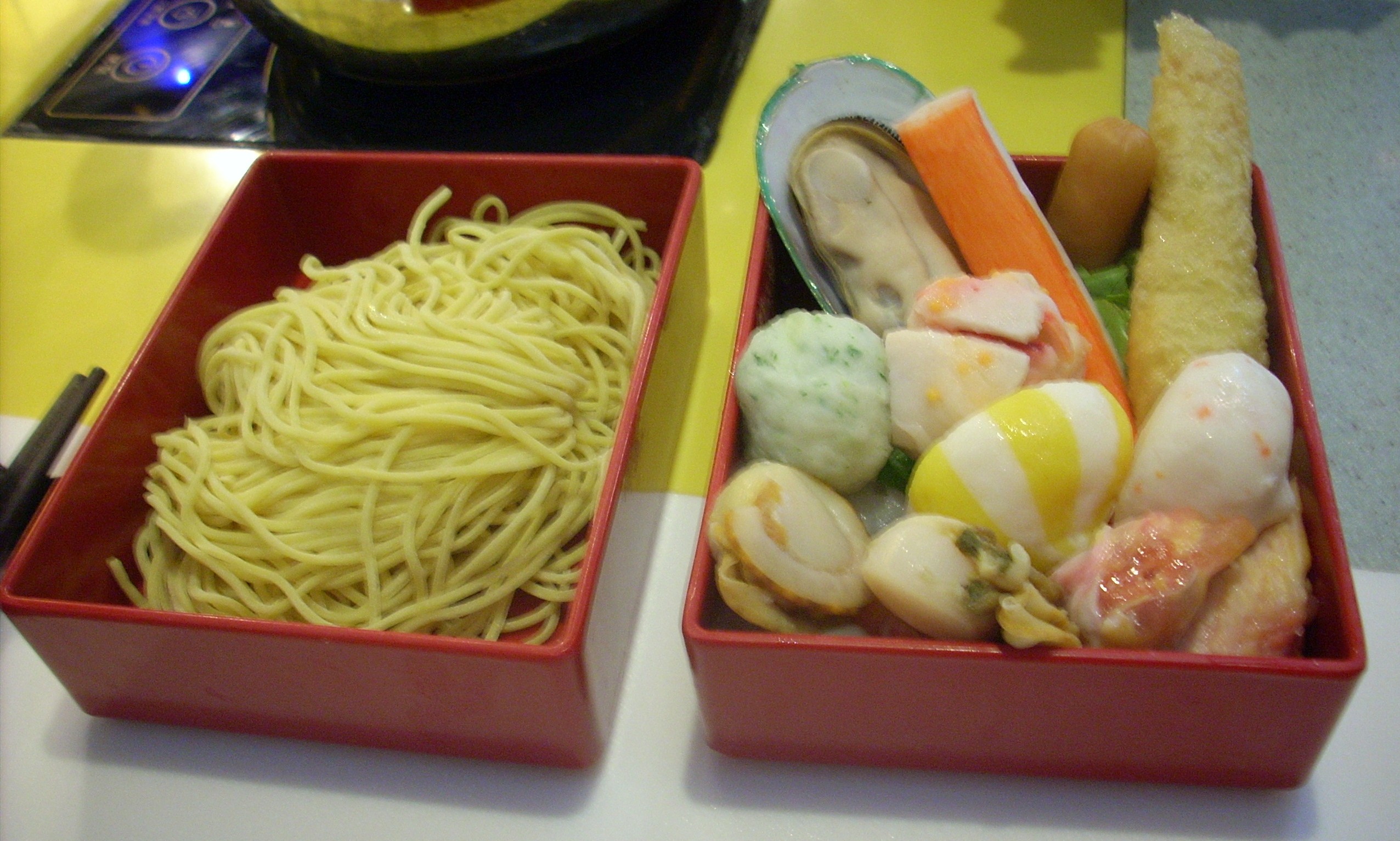
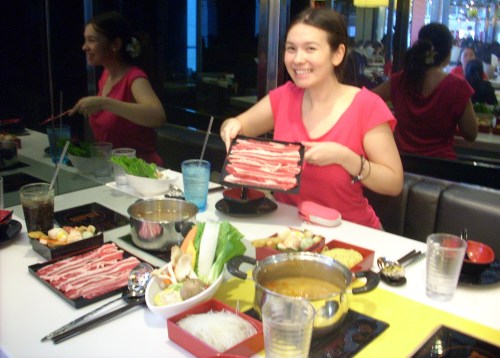
Little Sheep is styled after Mongolian hotpots, but Japanese hotpots are increasingly gaining in popularity here. Also known as shabu-shabu (Japanese for ‘swish swish’ to describe the sound of stirring stuff in the pot) or suriyaki, the two restaurants I’ve tried offered buffets rather than set platters (see above), with the hotpot a saucepan brewing on an electric hob in the centre of your table where you control the heat (see below), rather than the huge metal vat boiling away at Little Sheep. Given the cost of all-you-can-eat, plus side platters of fatty beef/pork, the choice and quality of ingredients is a little lower. Cocktail sausages, fish balls, leafy veggies and different kinds of bean curd, mushrooms and noodles are the main players. You also get a sauce bar (see above), where you fill a dish with whatever condiments you choose, most notably chilli, garlic and spring onions (and you can never go wrong with extra soya, right?) to dip your food in after cooking. Although I saw one person chucking their dishes of sauce into their hotpot, so anything goes. There is also a time limit, normally of an hour at lunch, 90 minutes at dinner.

At Mou Mou Club, we opted for the spicy soup base, which was really moreish, even if it did boast a bit of a kick! Their beef was an absolute delight as well – really flavoursome and tender – and it came piled high! The price varies depending on the quality of meat you pick and whether you’re content to stick to just one platter or want the option of getting more. Including a soft drink, it came to about $100 and there’s also all-you-can-eat ice-cream, including lots of toppings destined to take you back to your childhood. And everyone knows that rainbow sprinkles make everything better. Alas, no-one saying ‘Moo! I’m a cow!’ here though.
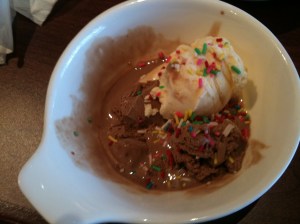
Over at Gyu Yin, it was much of the same. Their buffet was a bit better stocked but there was a bit less beef for your buck and our choice of soup base was bland. But the main draw of this joint (also coming in at around $100) was an unlimited supply of Häagen-Daazs ice-cream in four different flavours, which change regularly. My dining companion and I had absolutely no compunction in cutting short our stewing time to devote ourselves to dessert – and wielding that ice-cream scoop was a bit of a work-out, let me tell you!

My favourite, however, is HIPOT (which was the banner photo). This seems to be a fusion of all styles of hotpot (bar Lancashire) with a HK twist – there’s the Japanese array of dipping sauces yet also a more eclectic range of soups and ingredients. I absolutely adore their satay soup, super-tasty, just that little bit spicy and with that unique satay taste. Perfect for those like me who want a bit of a kick without having our socks blown off, it’s wonderfully moreish and the flavour really seeps into your food. But there is a stock for every taste, from the more aromatic mild coriander to the super-spicy ‘devil’ brew!
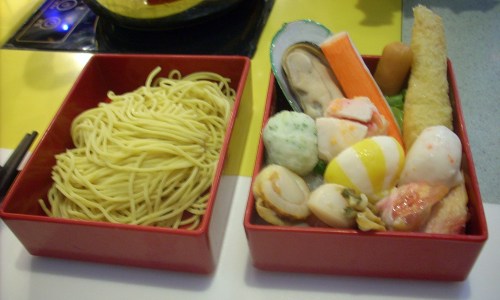
You can either opt for a set platter or individual dishes, ordering them like dim-sum. I had a set for lunch (a bowl of veg, a bowl of your choice of noodle and a bowl of ‘other’) and added a plate of beef extra, which still came to a quite ridiculously-cheap $58. The beef was surprisingly good, given its cost (although I could have done with another plate) and I really loved the dumplings. The yellow-and-white striped one was cheesy and creamy and generally lush. There was also a yummy veggie one and although the prawn/shrimp/crab ones looked a little dubious, they tasted lovely and the sweetness of the meat really came through. I gave the dry and unloved looking seafood a miss though, especially as it tends to overcook and get tough easily (especially if you forget about and later discover a rubbery lump at the bottom of your pan).

I also went a la carte at dinner and even with twenty or so dishes headed at our party of four, it came to just under $100 each, including an unlimited flow of soft drinks and juices of your choice. I’d highly recommend their range of bean curd (the wrinkly tofu skin becomes chewy milky deliciousness upon getting the hotpot treatment), the fish balls, the prawn dumplings and the smaller slices of fresh beef. Sorry I can’t be more exact but here we come to HIPOT’s downfall – the menu is only in Chinese! So I’m not sure if we ordered the wrong thing, but that night, the fatty beef was really tough and grisly whereas the ‘fresh’ beef was much nicer.

The real bonus about HIPOT is that you all get individual saucepans, which is great if you have a vegetarian in your midst or fancy trying a few different stocks. For those hygiene-inclined, it also means you are less likely to be sharing your germs with the entire table! It’s great for mulling over, having a chat and getting gradually full as you go, although you might initially be a bit pushed for space on your table!

[In general, I also can’t get enough of having udon noodles in hotpot. There’s just something about their fat, chewy, slippery unctuousness that tastes extraordinary in hotpot.]

So Hong Kong hotpots are cheap, tasty, filling and fun. With autumn well and truly here, there’s only question – what are you waiting for?!
– See all branches of Little Sheep in Hong Kong here
See all branches of Mou Mou Club in Hong Kong here
See all branches of GyuJin in Hong Kong here
See all branches of HIPOT in Hong Kong here


A Tamagotchi is for life, not just for Christmas

Remember the Tamagotchi craze that swept schools in the late 90s? Back in the day, there was barely a rucksack that wasn’t making beeping noises as some cyber-pet demanded having its poo swept up. Like all good fads, it died out as soon as I’d actually managed to get my hands on one (… or seven), elbowed out by another set of strange Japanese creatures (Pikaaaaaaa-chu!) but now in Hong Kong, it seems to be undergoing a bit of a revival and lots of my kindergarten kids had them.

Admittedly, we’re now on something like Version 629 of the Tamagotchi and in an effort to keep up with the kids, it’s evolved a bit since the simple days of my childhood version. I seem to remember an endless routine of feeding, playing, cleaning up poo and occasional beatings, whilst the paltry reward for your efforts was seeing the creature run off once it had grown-up. Ah, the joys of being a parent! But these days, it seems looking after your cyber-offspring is a lot more challenging.

I spotted a half-price Version 452 in my local Ella (home of novelty tweezers and windmill pens) and in a mixture of impulse and nostalgia, snapped it up. I told my boyfriend it would be like one of those projects they get feckless teens to do at school, where they make couples look after toy babies to show them the realities of parenthood (and given the amount of Coca-Cola my boyfriend drinks, there’s all likelihood of his baby looking just as alien as a Tamagotchi). So we got home, unwrapped the Tama and yes… things have definitely changed since my day.

Here are the instructions. Reminder: it has three buttons.

Nowadays, Tamagotchi has to go through intensive schooling, with different stages of kindergarten, school and finally, job interviews leading to actual employment (already one up on me then). You have to keep the little sod entertained with five different types of game, all as boring as each other. There’s a shop, where you can buy overpriced pencils, balls and building blocks that Tamagotchi just stares at nonplussed until you offer to play one of the boring games with it instead. He’s a sophisticated soul, eating sushi, checking his mailbox, going on holiday and even sending a postcard along the way. But it’s not all wine and roses in Tama-Town (and yes, there is a Tama-Town, more of which later) – there are thieves, someone sends you poo in the mail (!), he can get ill, lonely and fat and yes, he still defecates an awful lot as well.

These days, infra-red technology means you can connect with other Tamagotchis and make them your friends but alas, I didn’t know any other twentysomethings attempting to relive their youth in the silliest way possible. Chinese culture being what it is, I was soon being pestered by some old crone who didn’t want my Tama being left on the shelf, desperate to match-make her with some other Billy No Mates. Refuse too often and your Tamagotchi dies of old age (insinuation: sad lonely spinster); allow the match and your baby will soon have a baby of its own! Which, showing a bit less responsibility than you’d hoped you’d instilled in its upbringing, it abandons after a day for you to begin a new cycle of feeding, playing and poo-sweeping. It’s the circle of life and it moves us all!

The most amazing thing about Version 391 is that you take your pet to visit Tama-Town online. This is a place that looks more happening than my hometown – you can buy stuff, play at the arcade, go visit your old school and family (i.e. your original pet that ran off once it found love) and pay your respects to the King. In a feat of technology that I haven’t quite worked out but that Japanese children probably master before learning their times table, the website knows what creature your Tamagotchi has evolved into it and even has a record of its name. Spooky stuff.

Anyway, I named our first offspring Juicy – a bit porn-star but the boyfriend’s best suggestion was something involving Coke and I’m working with a 5-character limit, people! – and so the cycle of feeding, sleeping and pooing began. So exhausting was the level of care and attention I lavished on our newborn that I fell asleep; upon waking, my boyfriend told me it had been beeping. ‘Did you see to it?’ *Shrug* When my boyfriend eventually left, I tried to persuade him to take the Tamagotchi with him. How was I supposed to look after it at work? *Shrug* Hmmm… I see a pattern forming…

My colleagues were slightly bemused with my new toy and I had to keep sneakily feeding and poo-cleaning during my working day, but eventually Juicy grew up to be one of the prettiest Tamagotchis in the manual. ‘Is it a cat?!’ my colleague asked, squinting at the strange alien that seemed to have flowers for ears. But eventually, the old crone matchmaker practically set up shop on the postage-stamp sized screen, so I gave in and married her off.

Like mother, like daughter?

By the time she’d given birth, the novelty had worn off, even if this was Version 897. Looking after the new baby was a hassle, I’d named it in a hurry at work meaning it went by the delightful nom de plume of ‘ZZZXY’ and, as all those who didn’t take good care of a Tamagotchi well remember, it consequently evolved into an ugly little brute. This one was so ugly, it actually wore a mask over its face. It looked like Jason Voorhes from Friday the 13th for God’s sake! When it was happy, it bared its gleaming teeth in a freakishly bloodthirsty manner so it was frankly a relief when it died. And the infamous image of a floating halo and angel wings has remained bobbing on the increasingly dusty screen ever since.

So what have we learnt? That’s it’s alarming what can be achieved with three buttons (TV remote control designers, take note). That 90s toy crazes are best left in the 90s for those that actually experienced them first time round. And that I won’t be having babies, alien or otherwise, anytime soon!

Tamagotchi Version 4, $98, Ella

Grease @ HKAPA review

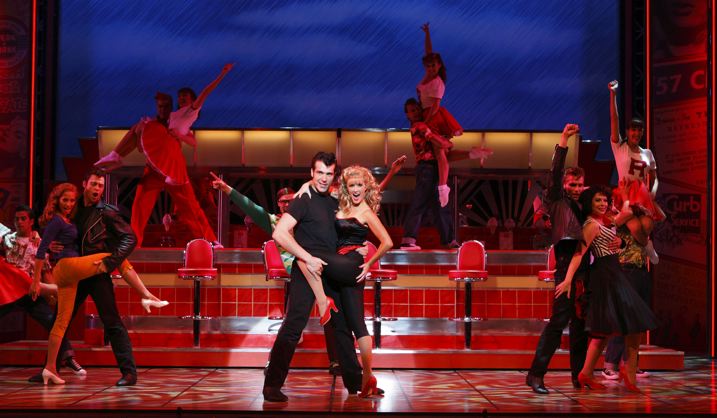
Hong Kong might not be the most rock n’ roll of cities but that hasn’t stopped a good old-fashioned slice of the stuff – complete with liberal helpings of hip swivels, slick quiffs and guitar riffs – going down a storm at the Academy of Performing Arts. Yes, Grease (otherwise known as the best musical of all-time by ummm… me) is in town and has its meter firmly set to ‘party’. In other words, it’s a complete joy.

Admittedly, I am biased. I probably knew the entire script and lyrics of Grease before I’d learned proper sentences, nurtured a life-long crush on John Travolta before I realised that he didn’t actually look like Danny Zuko anymore and this marks the fourth time I’ve seen the stage show (which, fact fans, came before the film and debuted in the West End with some unknown actor called Richard Gere as the lead). Each time, the law of declining averages has reared its ugly head with less fresh casts, crews and a sense of ennui creeping in as the show wound its weary way round the country for the nth time. So it’s with delight that I can declare that Lunchbox Productions have reinvigorated Grease with boundless enthusiasm, buckets of energy and enough hair gel to keep the cosmetics market buoyant for a good few years.

Jonathan Roxmouth’s Travolta pastiche is all-out hilarious. Never mind half of Rydell High having the hots for him, he practically has the APA audience eating out of his hand at the first trademark Travolta chuckle. The stage lights up every time he’s on it. Over the years, I’ve seen various Sandys ply their trade but Bethany Dickson is the best yet. She has beautiful vocals, strong but vulnerable, and doesn’t go in for the Celine Dion showboating that has come to mar many versions of Hopelessly Devoted To You. What’s more, she more than holds her own against Roxmouth, an achievement in itself. She’s the sweet to Roxmouth’s swagger and they’re the perfect pairing, palpably the shining stars of the show.

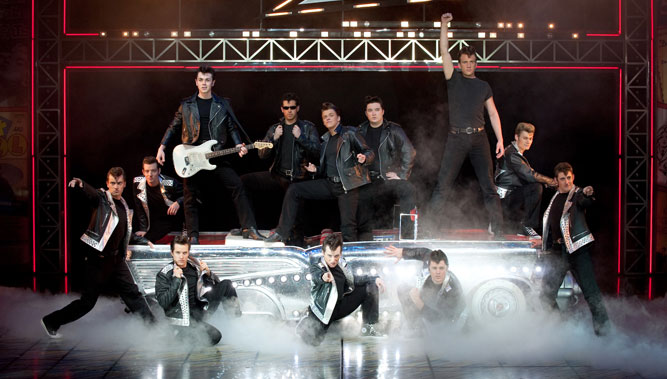
With such strong central casting, the rest of the 20-strong South African ensemble barely get a look-in, other than providing sterling support throughout. I enjoyed Kirsten Murphy’s brassy Marty and David Schlachter’s blatant scene-stealing nerd Eugene, but felt Genna Galloway’s Rizzo was a little one-dimensional in her hardness, there was not enough physical differentiation between the T-Birds and the cast sometimes swiftly skimmed over the funniest lines. But these are minor quibbles in a musical that relishes and revels in being spectacular – whether that means a light-up guitar, a blinged-up car or immaculately-executed jaw-droppingly lengthy musical numbers.

Arlene Phillips’ routines (yes, her who got fired off Strictly) were and still are my absolute favourite thing about the show. I never fail to get goosebumps every time I hear those stirringly electrifying chords of Grease that open the show, together with her brilliantly intense choreography that allows each and every member of the cast to shine. The big set numbers – the leaping dizzying spins of the male ensemble in Greased Lightning, the goofy gratuitous nudity of Those Magic Changes and the snappy innovative hand-play of We Go Together – are as irresistible as ever.

However, one element I really disagreed with was the doubling-up of Thembeka Mnguni as Principal Ms Lynch and Teen Angel. The Busby Berkley parodying Beauty School Dropout is one of my standout numbers and usually performed with such high campery by an actor doubling as DJ Vince Fontaine that it acts as catnip to a rapturous audience, who only allow him to leave after about three encores. Although the set design and costumes here are as gloriously glitteringly flamboyant as ever, this production instead makes Teen Angel a hefty soul diva who descends into an ocean of arm-waggling and voice-warbling which renders most of the (very witty) lyrics incomprehensible. Mnguni is also instantly physically recognisable as the school’s principal, which just seems rather weird, and it’s an interpretation of the role that is out of time with the 50s setting. She did, however, still get the biggest cheers of the night, so what do I know.

Elsewhere, the sets are slick, the costumes colourful and the orchestra a riot. Decked out in pink shirts and quiffs visible even from the back row, they seem to be having almost as much fun as the audience! Perhaps a little too much fun as they occasionally veer towards too loud and fast (since when did drive-in torchsong Sandy become midtempo?!) but they make rocking out seem a joy rather a job.

By the time the exhilarating final Megamix has high-kicked its way onto stage, resistance is futile. When Danny Zucko actually starts speaking Cantonese and gets the whole audience on their feet, it’s obvious that this cast have such passion and joy for their profession that it can’t fail to be infectious. I was thrilled that the Hong Kong audience lapped it up with such obvious humour and enjoyment, which bodes well for future world-class musicals doing the rounds in our fair city.

It’s a rollicking ride of a show that you can’t help but be swept up – how many other musicals boast a light-up car to their name?! So come armed with your dancing shoes, get practising your hand jive and long may Grease continue to be the word.

Lunchbox Productions’ Grease runs at Hong Kong Academy of Performing Art’s Lyric Theatre, 7 October-7 November 2010. Tickets cost $350-$895, available from HK Ticketing, 3128 8288 or online. No shows on Monday, evening performances 8pm (Sunday 7pm), weekend matinees at 2pm.

Note: Some of the photos show how HKAPA has been decked out in Grease regalia. I love the effort that has gone into it, emblematic of the scale of the show itself.

Mid-Autumn Festival Hong Kong 2010, The Rhapsody of Hong Kong Memories: Lights, camera, lanterns!

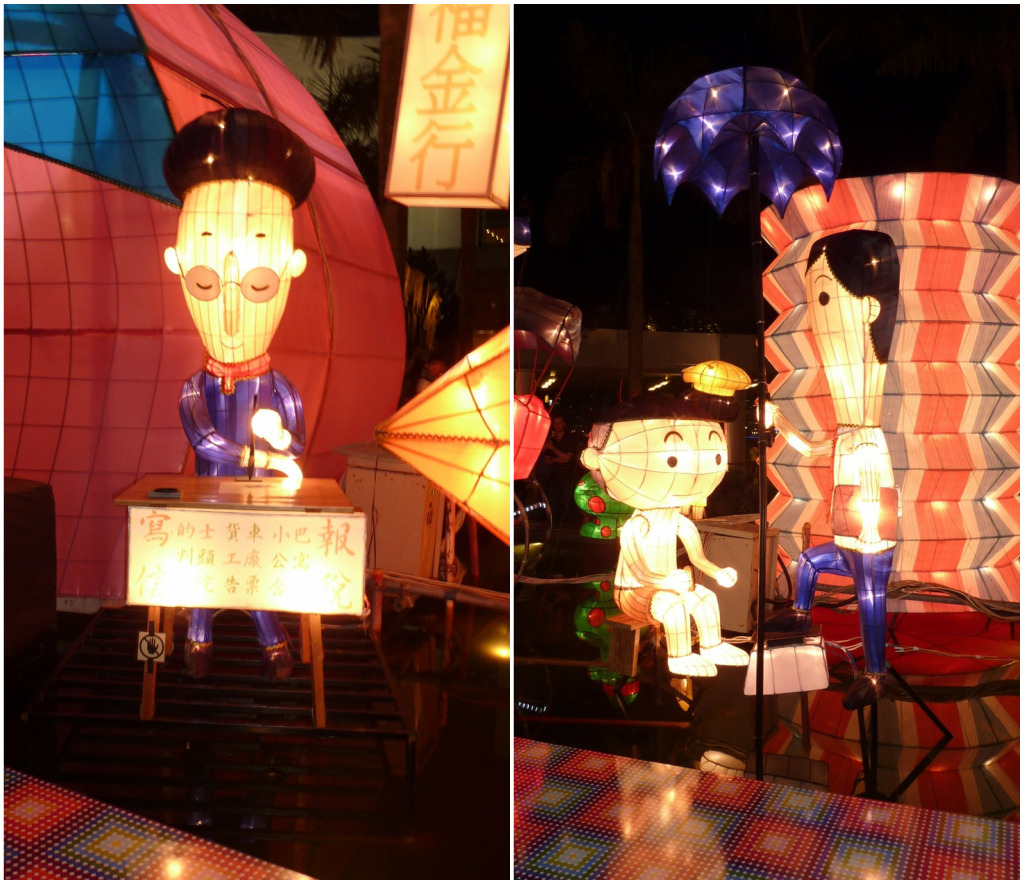
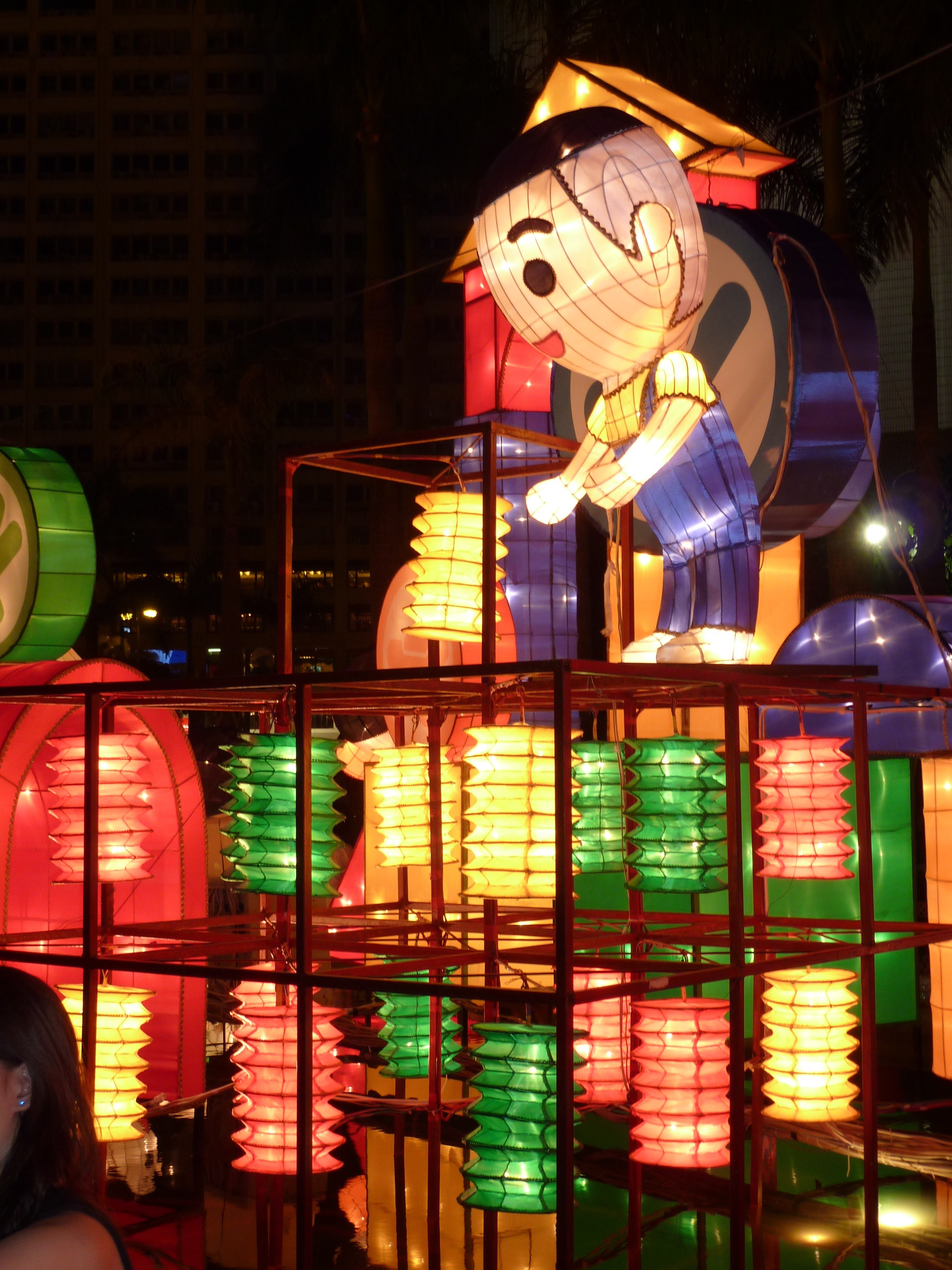
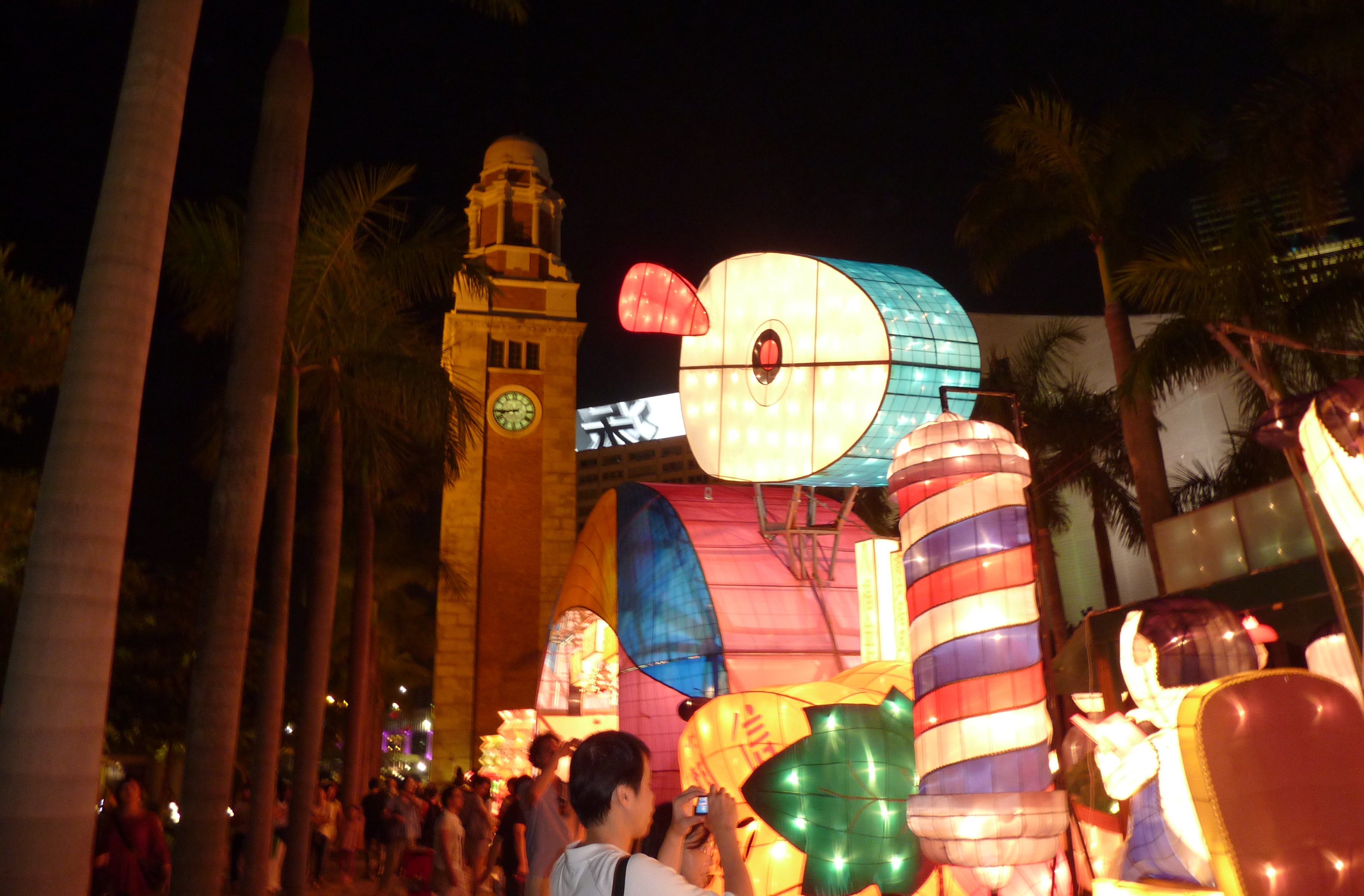
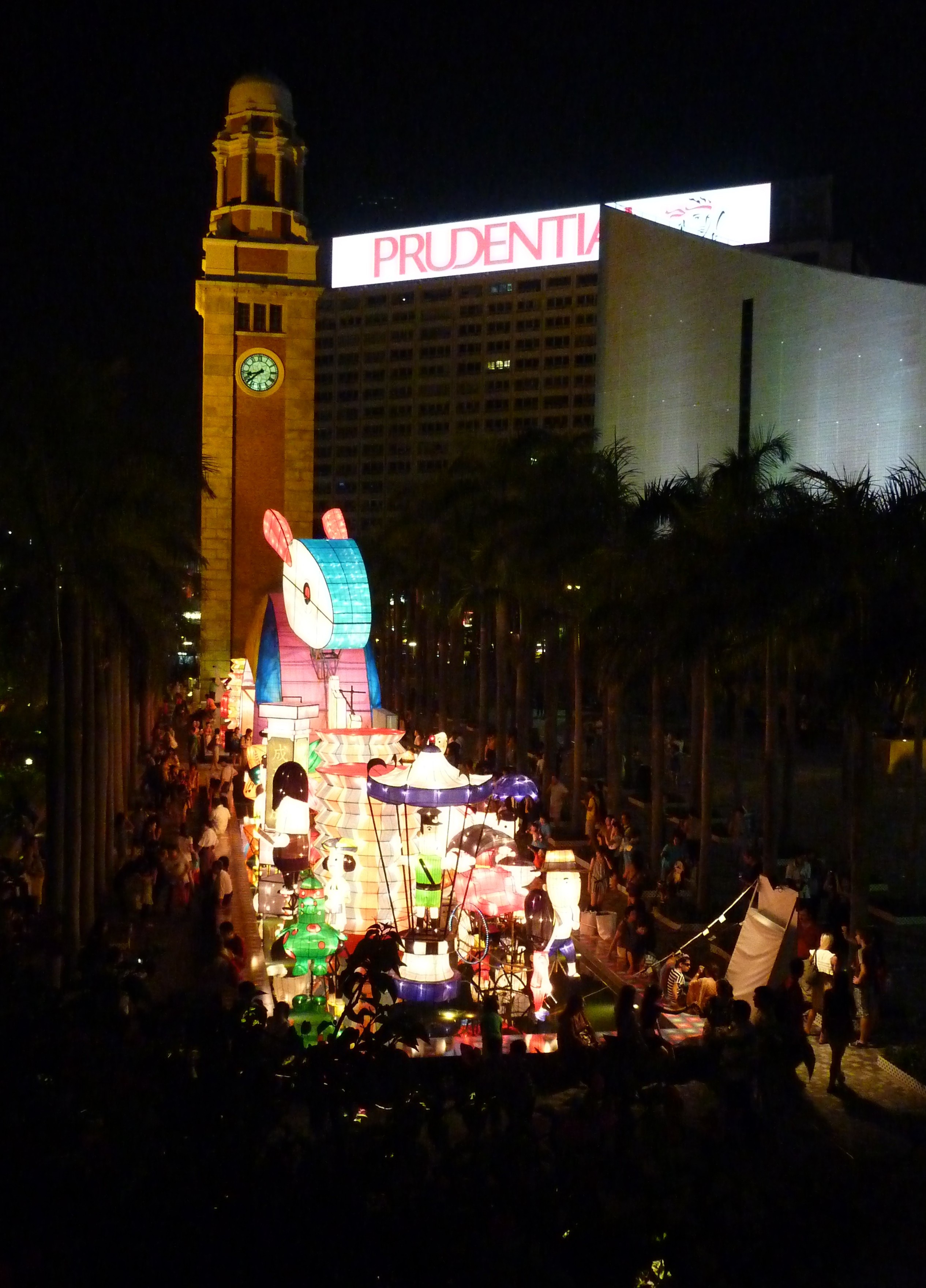
The lanterns didn’t stop there. Over in Tsim Sha Tsui, there was an absolutely amazing lantern display entitled The Rhapsody of Hong Kong Memories. These cute and quirky lanterns, depicting nostalgic scenes from 1960s Hong Kong, were designed by Leo Tang and I thought they were just lovely. Perfectly capturing the spirit of Hong Kong with a fond heart and light touch, it’s the sort of ephemera that’s unlikely to go down in the history books but provokes all sorts of loving rose-tinted memories. Now I’ll let the photos do the talking; as ever, click for enlargements.

Hustle and Bustle

These show scenes from 1960s city life, including many traditional businesses that have since died out, like shoe-shiners, calligraphers and rickshaw drivers.

A policeman in his pagoda directing traffic in the days before traffic lights. (Vintage photos from HK Police Force website and HK Man’s Flickr).

A tai-tai at the tailor’s – check out that retro hair-do!

I loved the attention to detail. Here the little boy at the barber is reading a comic-book to keep him entertained – and you can actually look inside the box and see what comics are on offer (hello Astro Boy!).

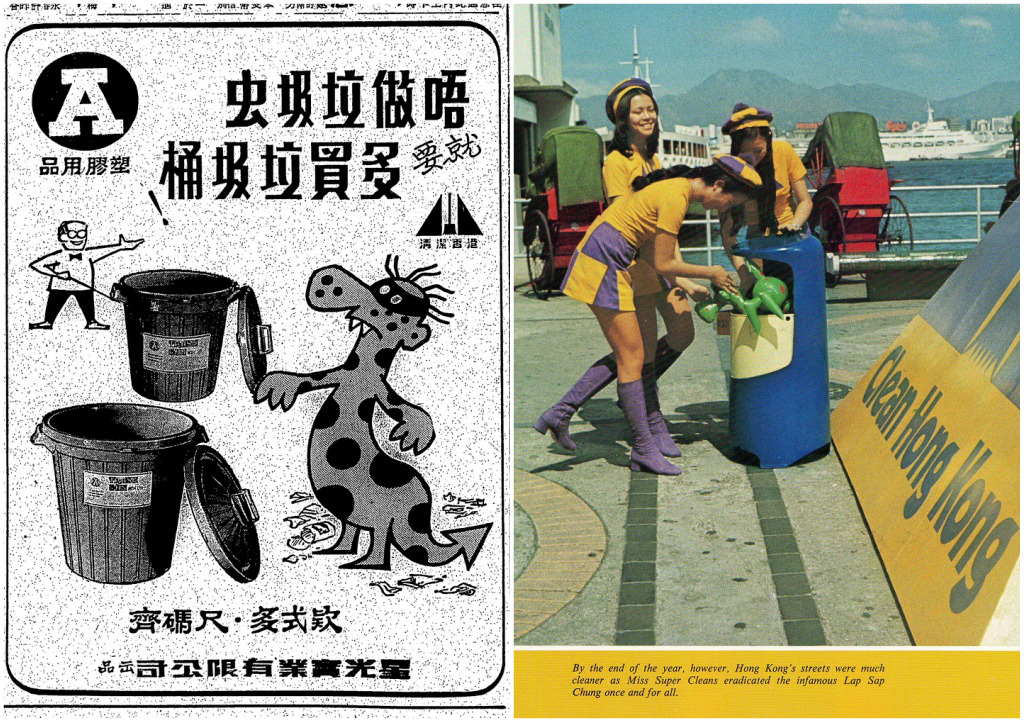
This little fellow is Lap Sap Chung, a monster created in a campaign to stop HKer’s from littering. He’s being chased by Miss Super Clean, remembered by lots of pre-pubescent teenage boys for her mini-skirts and go-go boots! Mischievous Lap Sap Chung proved so popular that he soon found himself being recreated as merchandise and inflatable toys! His memory was so enduring – a survey found that over 90% of respondents had heard of Lap Sap Chung! – that he was revived for a recent Keep Hong Kong Clean campaign. He even has a Facebook Group in his honour! (Posters from Chan.police’s Flickr and Gwulo.com)

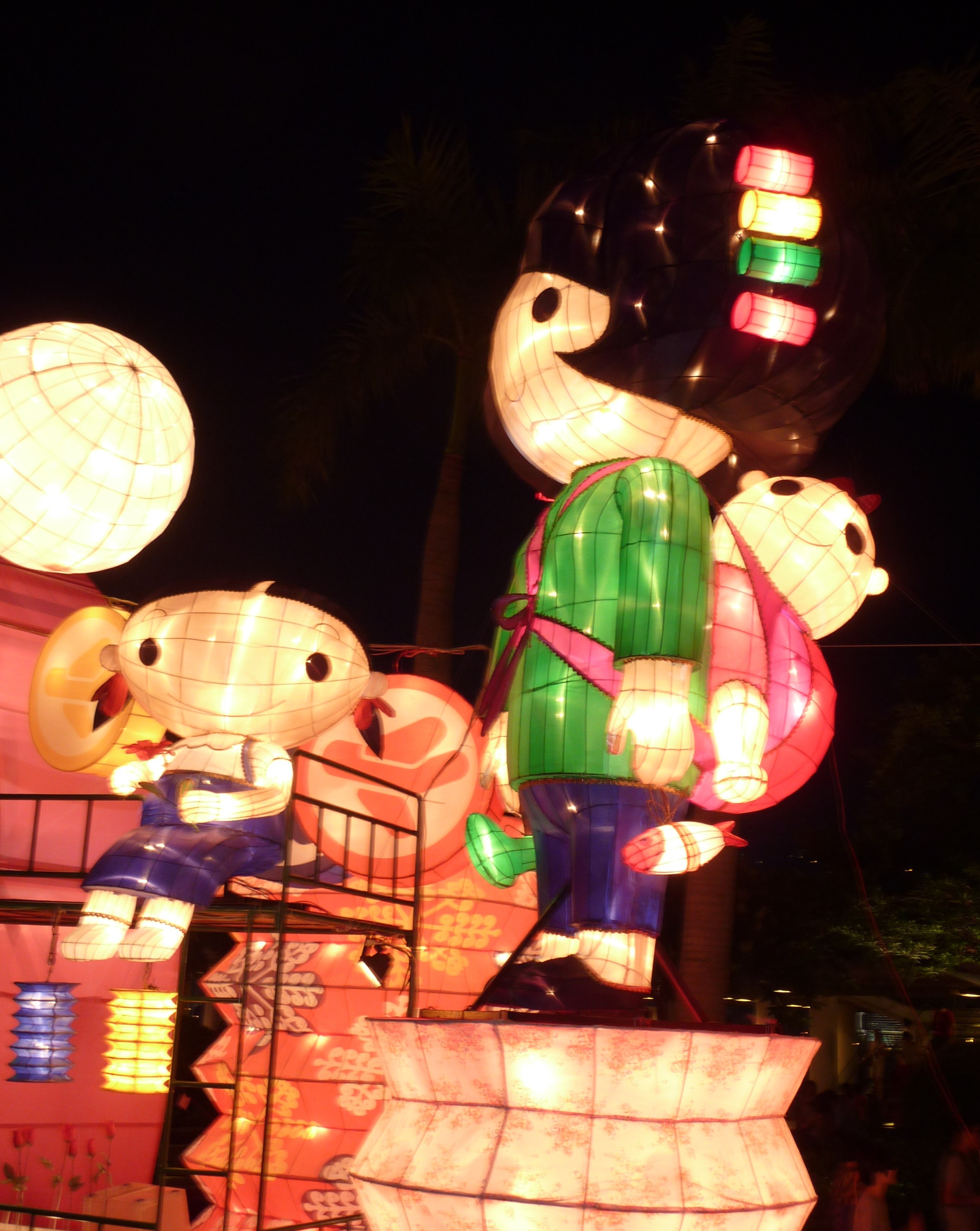
Also note the red, white and blue striped lanterns in the background. These are based on the infamous plastic ‘amah bags’ that you see at wet markets or lugged around by Filipinos, burst to breaking point. I even saw one woman trying to post a full one! (Photo from Red, White, Blue, Here, There, Everywhere Flickr)

Delicious Memories

What would HK be without its food?! Here’s someone enjoying a meal at a dai pai dong (food stall in the street) – love how you can see the pak choi in the owner’s wok!

A spinning cup of milk tea (ngai cha), so beloved of HKers, being serenaded by a teddy boy.

A street hawker, carrying wicker baskets full of vegetables suspended on a bamboo pole on his shoulder. I love how the lady buying from him even has a shopping list in her hand!

An ‘airplane olives’ (fei gei larm) hawker with his distinctive brown paper bag. If you saw him in the streets, you would call down and he would throw the olives up to you several stories high! You would then drop down your money – only paying for what you caught, mind!

Not sure what this guy’s offering us. Hotpot? Congee? An ashtray? (OK, the last one seems unlikely). Answers on a postcard please.

Starfruit-shaped lantern!

Home Sweet Home

This one confused me – was there some strange game in the 1960s where kids had to run to and from a tap?! My auntie had a look and thinks it refers to the days when children would have to go to the village tap to collect buckets of water for the whole family back home. (Those slippers are so Hong Kong as well!)

In the old days, apartments were very small and people slept in simple metal or wood bunk beds to save as much space as possible. Here, the little girl is making plastic flowers by hand, a part-time job many people had in the 1960s to generate a little extra income.

The mum, carrying her baby in the typical Chinese papoose-sling on her back, seems to have rollers in her hair. No GHDs in those days!

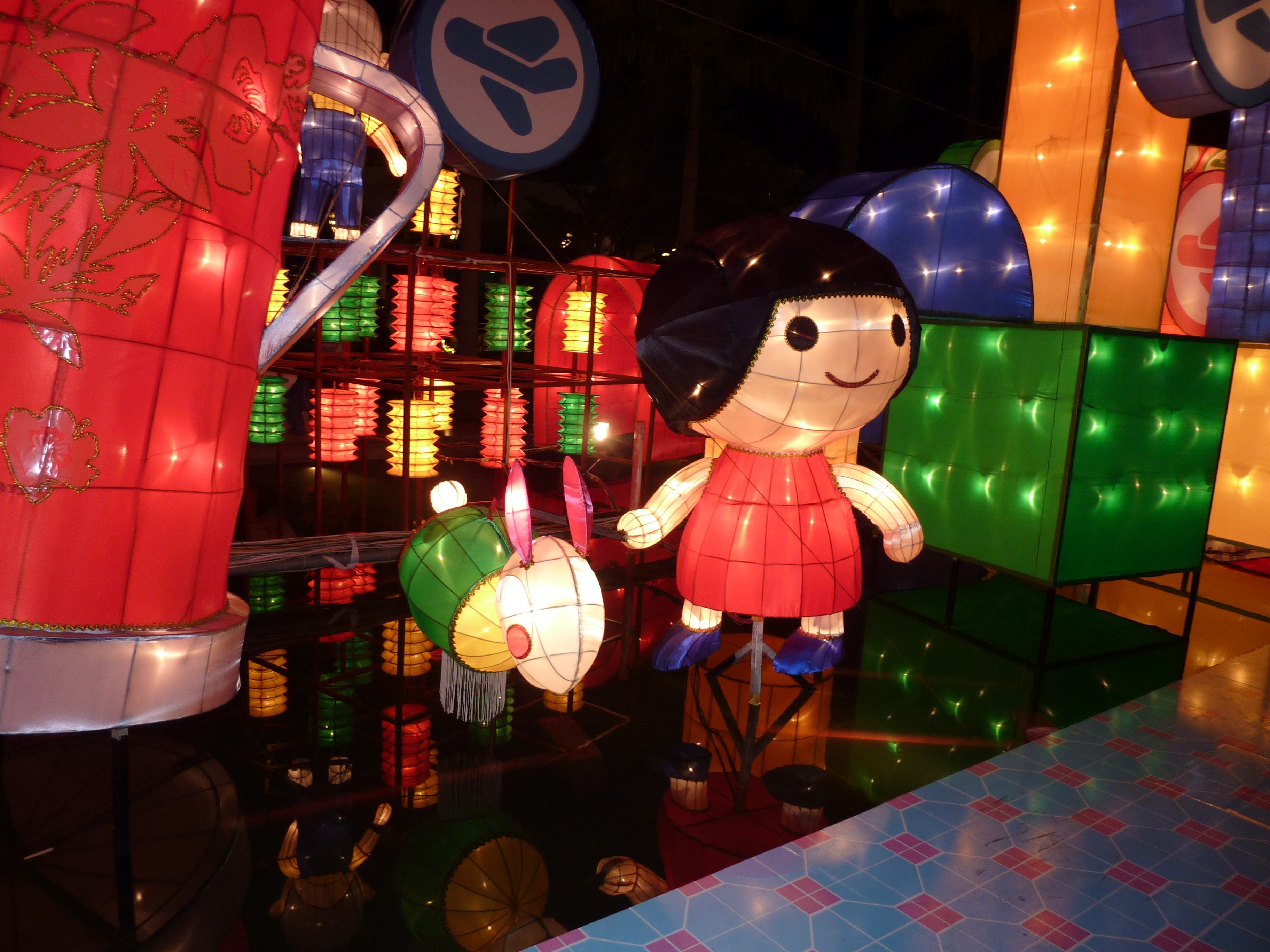
The little girl is holding a traditional rabbit lantern for Mid-Autumn Festival; these stem from the rabbit’s presence in the myth behind the Moon Festival and are still sold nowadays.

Traditional paper lanterns for Mid-Autumn Festival – none of that inflatable singing and dancing tat in those days!

Do I need to tell you this is a retro thermos flask?!

Play & Playground

You might notice that some of these happy children are running about in what appear to be the old-school colourful wooden building blocks that children from yesteryear used to play with.

The circle-shaped counters with different coloured airplanes on, seen floating in the background or decorating the giant lanterns, are from a popular Chinese board game, Flying Chess (飛行棋). I say board game, it’s actually played on a fold-up piece of paper and works similarly to Ludo or Frustration. I only noticed this when I was looking back on my photos afterwards and it’s the little touches like this that Tang totally nails; I actually remember playing this when I was little and seeing that detail really made me smile, which is exactly the sort of response I think he hoped for. (飛行棋 photo from DChome forum – I swear I have the exact same game at home!)

The centrepiece to the whole display was a giant rabbit lantern, stuffed with old-school lamps, shop signs and birdcages. The amount of work that must have gone into it! Almost seems a shame that it will all have to be taken down : (

Cute, charming and quintessentially Hong Kong. What’s not to love?

The Rhapsody of Hong Kong Memories, Hong Kong Cultural Centre Piazza (near Star Ferry), Tsim Sha Tsui. 10 September until 17 October 2010, 6.30-11.30pm.


Mid-Autumn Festival Hong Kong: It’s a marvellous night for a mooncake

Mid-Autumn Festival may just be one of my favourite festivals in Hong Kong because just about everywhere makes the effort to look pretty. Admittedly, all it takes is a few paper lanterns scattered about, but at night time especially, it looks charming and uniquely Chinese.

Also know as Moon Festival, it’s held on the 15th day of the 8th month (of the lunar calendar, so roughly late September) when the moon is supposed to be at its brightest. There are many variants of the legend behind the festival, but I’ll tell you (in the best Chinese tradition!) the one that my mum told me.

A long long time ago, there used to be ten suns in the sky, which burnt away terribly at the Earth. The emperor commanded the most skilled archer in all the land, Hou Yi, to shoot down all but one of the suns – which he did, leaving us with the one sun we have today. As a reward, he was given a magic potion that would grant him eternal life and he hid it away at home. According to my mum’s version, Hou Yi became a tyrant, corrupted by power and ambition; on seeing this, his beautiful wife, Seung Orr, decided to eat the pill herself to prevent him from living forever (other versions have the wife finding and eating the pill accidentally). Upon eating the pill, she found herself becoming lighter and lighter and she began to float. Eventually, she floated out of the window, up into the sky and onto the moon where she lives today. She also has her rabbit with her, who you can sometimes see outlined on the moon.

If you’re a virgin to Moon Festival, there are only two things you need to know – lanterns and mooncake! Seung Orr adorns many a mooncake box and the traditional cakes are made with a yellow duck egg inside, representing the moon. Nowadays, there are all kinds of modern takes on the mooncake, including chocolate, mango, green tea or even ‘snowy’ ice-cream ones. We bought one that was shaped like a pig! It came in a miniature version of the traditional basket that real pigs used to be carried to market in the olden days and I love how he even has a little curly tail. Alas, he had to be decapitated and eaten – the filling was green bean paste – and my auntie said he looked a lot nicer than he tasted!

Lanterns are lit to accentuate the brightness of the moon and on the day of the Mid-Autumn Festival itself, paper ones are lit and floated off to the moon. This year, one managed to land on an MTR train, sparking a small fire, panic, evacuations, delays and talk of regulating lanterns more closely next year. As with mooncakes, lanterns have evolved with the times and you can get them in practically any shape, size or colour you desire, with inflatable musical cartoon character versions proving particularly popular with youngsters (so if it’s late September and you’re hearing a tinny tune in the dim and distant, it’s probably a toddler holding a blow-up Doaremon).

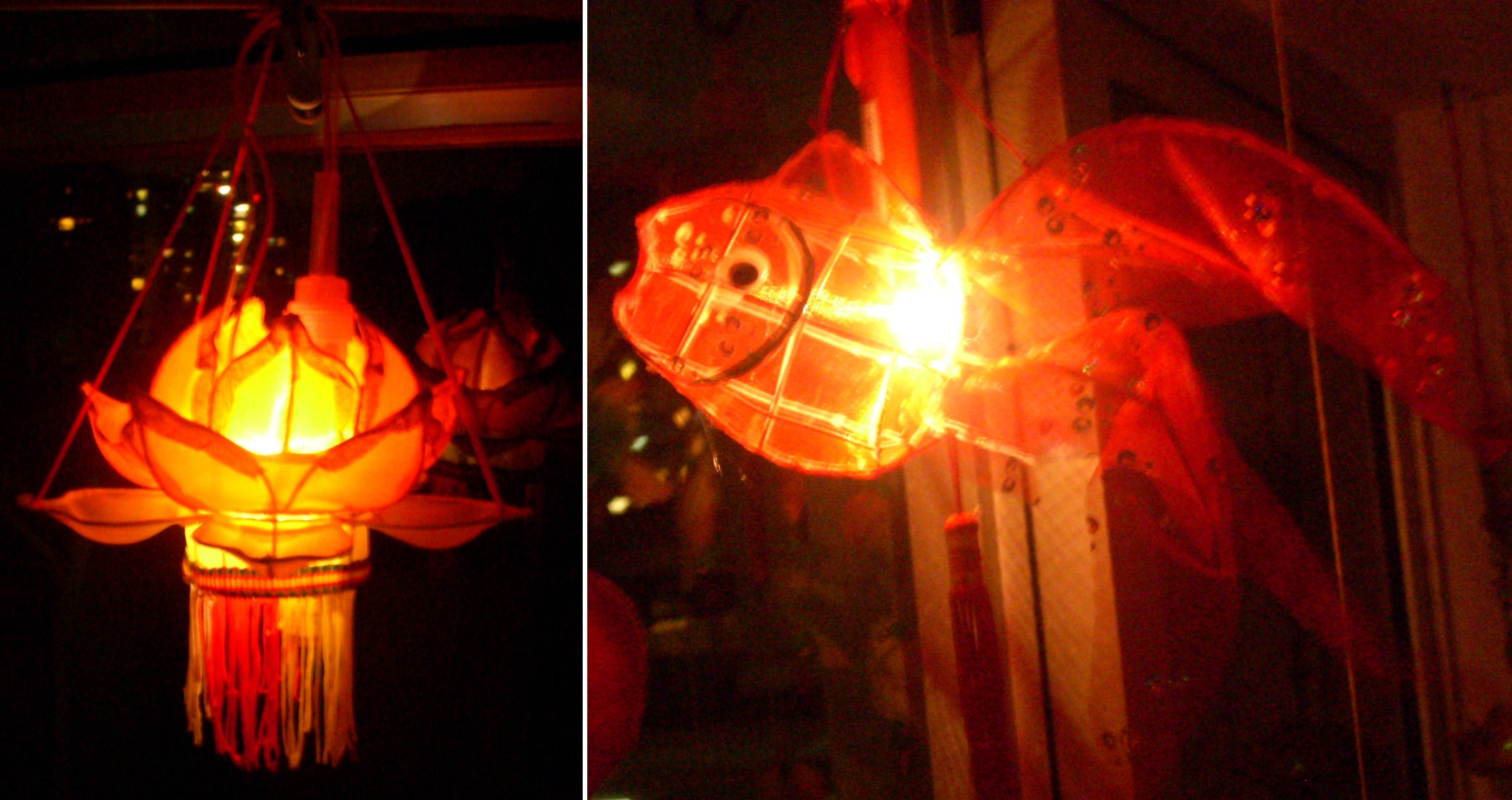
We went to the special market in Tsing Yi’s Maritime Square Mall, which is basically your one-stop Mid-Autumn shop. As you can see, the lantern stall was a riot of colour! We bought two ($35 each) – a pretty lotus flower and a gorgeous goldfish. You can see them in action in our flat below!

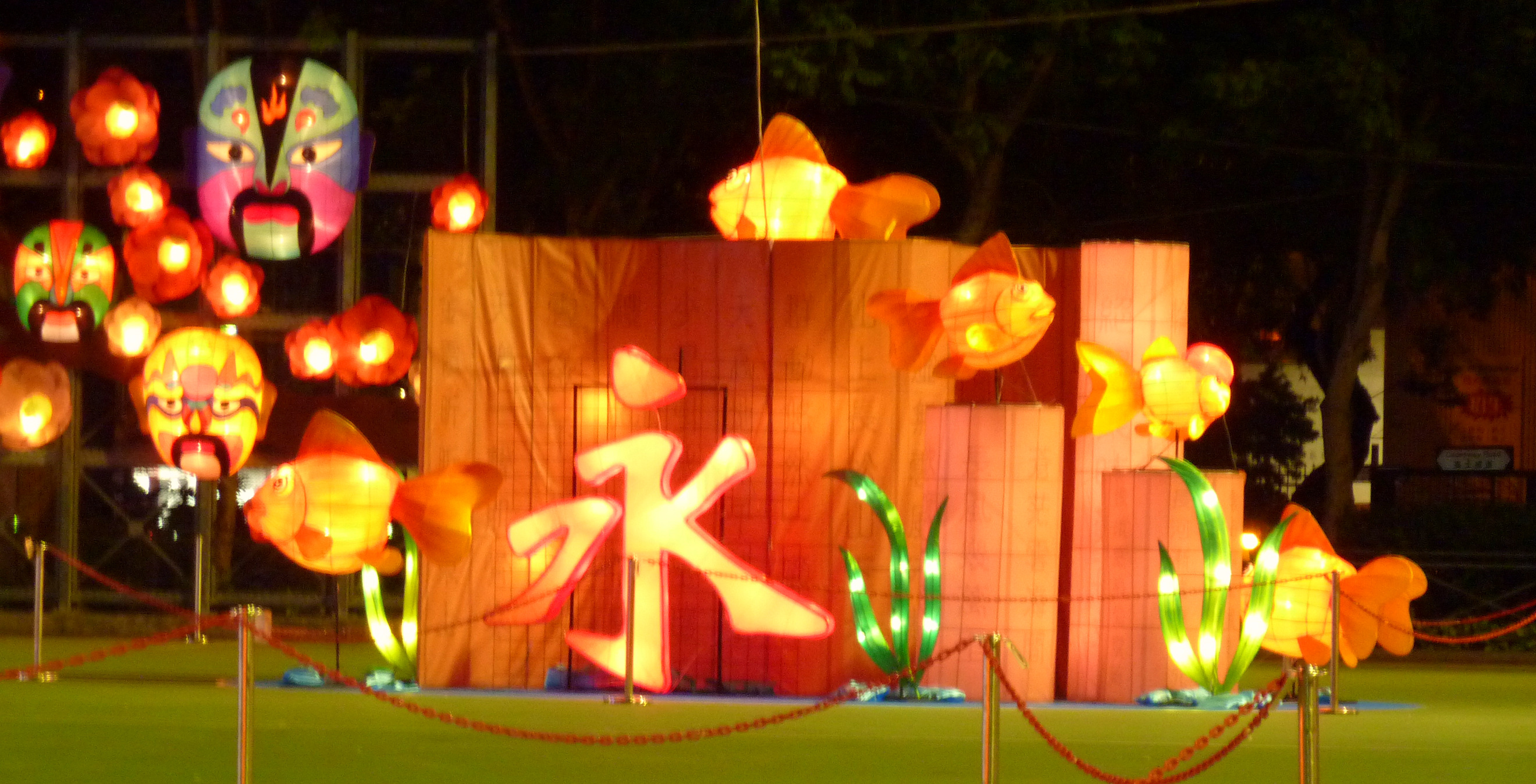
However, these are mere small fry compared to the lanterns that the government has built to mark the occasion. For all of Mid-Autumn weekend, Victoria Park in Causeway Bay is transformed into a luminous lantern extravaganza. It costs a small fortune but hey, who cares when it looks this spectacular?!

Check out my posts on more beautiful Mid-Autumn lanterns in Tsim Sha Tsui in Hong Kong here and here