Australia’s Next Top Model, Cycle 4: A model example?

Whilst BNTM continues to progress at a snail’s pace i.e. weekly, I’m rapidly making my way through every other English-speaking cycle in the Next Top Model franchise.

As you’ll already know, I rated AusNTM Cycle 5 rather highly. Alas, whilst Cycle 4 offered no punching of walls, swearing at end of catwalks or stealing of lines, it did have a huge bullying controversy and a thoroughly undeserving winner to recommend it – if recommend is the word! Winner Demelza Reveley may have had the flowery name and golden good looks of a Disney Princess, but what a horrid creature she was. Ringleader of the self-named ‘Bitchketeers’ (how dumb must you be to give yourself such a name knowing you’re being filmed), she sniped away unpleasantly at fellow finalist Alexandra Girdwood throughout the entire run and together with her minions, made life a living hell for contestant Alamela Rowan whilst giving simpering butter-wouldn’t-melt-in-mouth VTs. [Alamela was a bit of an oddity anyway – with her alarming poise, pale skin, sing-song voice and penchant for bursting into operatic arias, she had the air of a possessed child from a horror film.]

Quite how Demelza managed to reach the final, let alone win, remains to be seen (she also had a string of vacant-looking photos and fat hips which she did nothing about, even when another girl, Caris, was continuously badgered about her body) – especially as the final of AusNTM is partially decided by public vote. Perhaps it was because she was up against Alex, whose main claim to fame that series had been deliberately fattening up the rest of the girls with calorie-loaded muffins (pure brilliance!). She also had collagen implants, meaning her lips stayed put even when she’d left the room hours ago, a strong editorial look that didn’t always work for other shoots and was clearly more fashion-savvy and intelligent than your average NTM contestant, easily running circles around the Bitchketeers in any arguments. Or perhaps it was because of the blatant favouritism shown by host, Jodhi Meares – herself the cause of controversy for being the only head judge with credentials as a glamour model, being unable to talk without a huge red clipboard of prompts and having a last-minute freak-out which meant she didn’t present the live final and was never seen or talked about in NTM ever again.

But onto the pretty things – the photos. You already know about my love for Russell James so unsurprisingly, I’m a fan of these beach shots. I think more could have been made of the setting, yet I love the intensity he gets out of the girls. These photos have a beautiful warmth and innocence to them, with their eyes completely connecting with the camera. Who knows how much Photoshop goes into these things, but the way James captures the light, depth and glitter to models’ eyes is totally arresting. This, incidentally, is Demelza’s best photo – it wasn’t even shown on the show and is supposed to be advertising swimwear, so make of that what you will! (top to bottom: Sam, Demelza, Alex, Caris)

My other favourite shoot this season was by Simon Upton, where the girls modelled shoes whilst being harnessed to the side of a tall building. The styling here is fantastic – I love the bright colours and fluorescent make-up, which complements the dynamic energy of the poses. With such great styling and the dramatic cityscape background, the girls really didn’t have to do much (well, if you count bouncing off a wall at a 90 degree angle wearing stiletto heels and with a harness digging into you as not much). The top banner picture, which has an amazing movement to it, is of Leiden, the butch bogan of the series, who was always ‘shittin’ bricks’ and having frequent meltdowns and made for very good viewing too. Also shown are (top to bottom) are Sam, Alex and Caris – I’m still in two minds over Caris’ photo, as she either looks like a serene fallen angel or just a corpse, but at least it’s interesting, which is more than I can say for Demelza’s efforts.

I mentioned that the girls didn’t have to do much for Upton’s shoot – and Demelza certainly did just that. Not much. This photo has the air of the crew tidying up for the day and realising ‘Shit – we left a girl up there!’ Alas, Reveley was not left out to dry but had merely slipped whilst bouncing about. Never mind that by being flat-out horizontal, she ruins the proportions of the photo – the model should be the focus, not somehow hanging like a bat on the peripheries and only noticeable because of her colourful quilt-thing. The very thing she’s supposed to be selling (the shoes) barely make the frame! Oh well, at least the skyline looks nice.

Here’s the Russell James shot that was chosen for the show. I’d find it vaguely inoffensive if Jodhi Meares hadn’t suddenly started orgasming and having babies over it – made doubly awful by the fact that the girls were modelling her bikinis and so she had the sway of being the client too. Her posture’s awful, her eyes are vacant, she looks generally gormless and the whole thing’s just blah, lacking the intensity of the rest of the James’ shots. And as my boyfriend pointed out, the pose that Meares went gaga for was stolen from Willy The Wimp, a character I had no idea even existed before I was forced to Google Image to verify my boyfriend’s claims. And now, I can’t see this photo without thinking of a shy-looking monkey. Willy The Wimp for first call-out!

Great Forgotten Pop Songs: A*Teens – Closer To Perfection

It was only a matter of time before Great Forgotten Pop Songs took on a distinctly Nordic air. Scandipop is one of my great music loves – so much so I dedicated a whole unloved month to it at Teentoday. Why? Those sneaky Scandinavians simply do pop better than everyone else and have been doing so ever since Abba Waterloo-ed their way to Eurovision victory in the 70s. Prime example – Closer To Perfection by The A*Teens.

For most acts, Closer To Perfection would be the jewel in their crown, the ace in their pack, the Berry in their Glee Club. For a Scandipop act, it was mere album filler. A glittering gem on their New Arrival album, Closer To Perfection holds the distinction of not only being a great forgotten pop song of our time but also one of my all-time favourites.

The A*Teens started life as a rather dubious Abba covers act, putting an eletro sheen on classic tunes to re-sell them to a whole new teenybopper market who found Marie/Sara/Dani/Amit attractive. Abba songs are so timelessly perfect that all covers of them lie on a scale somewhere between ‘unnecessary’ and ‘blasphemous’ so I don’t think I need waste much time on the group’s earliest incarnation. America actually thought they were various Abba members’ offspring, which just about tells you everything you need to know about their early marketing (and about America).

Having realised Abba covers weren’t a viable prospect for longevity in a pop group, someone decided that the A*Teens should start recording original songs. Hand that someone a biscuit and make it a caramel chocolate digestive because from then on, it was one pop glory after another. Fronting sunny, fresh and damn catchy tracks like Floorfiller, For All That I Am and Halfway Around The World (and I make no apologies if said tunes crop up on this series at a later date), A*Teens were ready to take their place amongst Sweden’s legacy for producing pop so good that you wonder why other countries still bother. They reached their pinnacle with New Arrival album track, Closer To Perfection.

Initially a slightly underwhelming vaguely electro number, Closer To Perfection somehow makes the transition to blissfully wonderfully perfect without you even consciously realising. I account this to a sprinkling of Swedish fairy dust but if you’re looking for more earth-bound reasons, I suppose I could bang on about the quietly empowering lyrics, the stunning synths, the shiver-down-spine key change from middle eight to final chorus and a chorus that exudes a hold stronger than Derren Brown doing his spooky stuff on an unsuspecting public.

Proof that break-up songs needs not all be clenched fists and feisty divas, the chorus of ‘I’m back in the light getting over you, now I got it together, I’m stronger than ever/Back on the track with a better view and I’m getting closer to perfection cos of you’ is as quietly uplifting as the best of them.

I challenge you to find a pop number from a teen band that, vocoder-ed to the hilt and as catchy as they come, exudes quite so much obvious class. Looking at A*Teens (generally terrible) promo photos, I’m not entirely sure how they managed it myself. Closer To Perfection? Pretty much as close as they come, actually.

UK Chart Peak: Unreleased
Key lyric: ‘I’m getting closer to perfection cos of you’
Get more A*Teens: For All That I Am, Floorfiller, Halfway Around The World

Australia’s Next Top Model, Cycle 5: Pretty (young) things

This blog promised to deliver you pretty things but so far, this has consisted mainly of cute objects spotted out and about in HK (novelty tweezers, windmill pens, lai see packets). So may I present to you some genuinely literally pretty things – contestants and their photos on Australia’s Next Top Model, Season 5.

ausntm cycle 5

Crawling the walls in frustration at having to wait a whole week for new episodes of the current season of Britain’s Next Top Model (I do weekly recaps for Teentoday), I started working my way through various cycles from around the world. Apart from America. I’d say ANTM jumped the shark long ago, but I’m not sure it was ever under/behind/away from the shark to start off with. Miss J has become such a grotesque caricature of a camp fashionista that he sets my teeth on edge, his cringeworthy flights of fancy with batshit-crazy Tyra are skin-curling (their rambles at panel are like you’ve picked up the receiver and accidentally overheard your parents having phone sex or something) whilst the last vaguely bearable part, the photo-shoots, have become so outlandish that they’re now totally ridiculous. In contrast, most other countries’ takes on the format are grounded in reality, shooting real campaigns and photos that could feasibly feature in glossy magazines, rather than adverts for the local freak show.

Season 5 of AusNTM was possibly my favourite cycle of the show to date. The judges were hilariously catty whilst actually speaking sense, the girls were uniformly pretty from the start (rather than the usual ‘I could find better hanging round my street corner’ but who apparently have ‘a strong look’ or could do ‘great editorial’ work), the challenges were realistic, the show was well-paced yet still drama-stuffed and the photos were often breathtakingly beautiful. Season 5 featured ‘bogan-ista’ Cassi van der Dungen, who punched walls in anger, swore at the end of catwalks, was continually puffing on a fag despite habitually claiming to have given up and proclaimed her desire to leave every other week whilst frustratingly taking amazing photos too = brilliant television. I was just happy that the word bogan was in common usage in Oz and not just a creation of Neighbours. [She later managed to get embroiled in a Facebook war with Charlotte Dawson and Alex Perry and make derogatory comments about the French after quitting Paris Fashion Week.]

And I haven’t even mentioned lantern-jawed Lola’s line theft during the Maybelline commercial, one girl weeping she would rather go home than have her hair cut and the insane amount of bitching that culminated in fat accusations, fag ends being dumped in someone’s bed and Cassi storming into someone’s shower and all-too-scarily threatening to rip her hair out. The season was eventually (and justifiably) won by Tahnee Atkinson, a big blue-eyed curvy beauty with an irresistible mouth. Totally cute, and yes, I had a girl-crush on her all season.

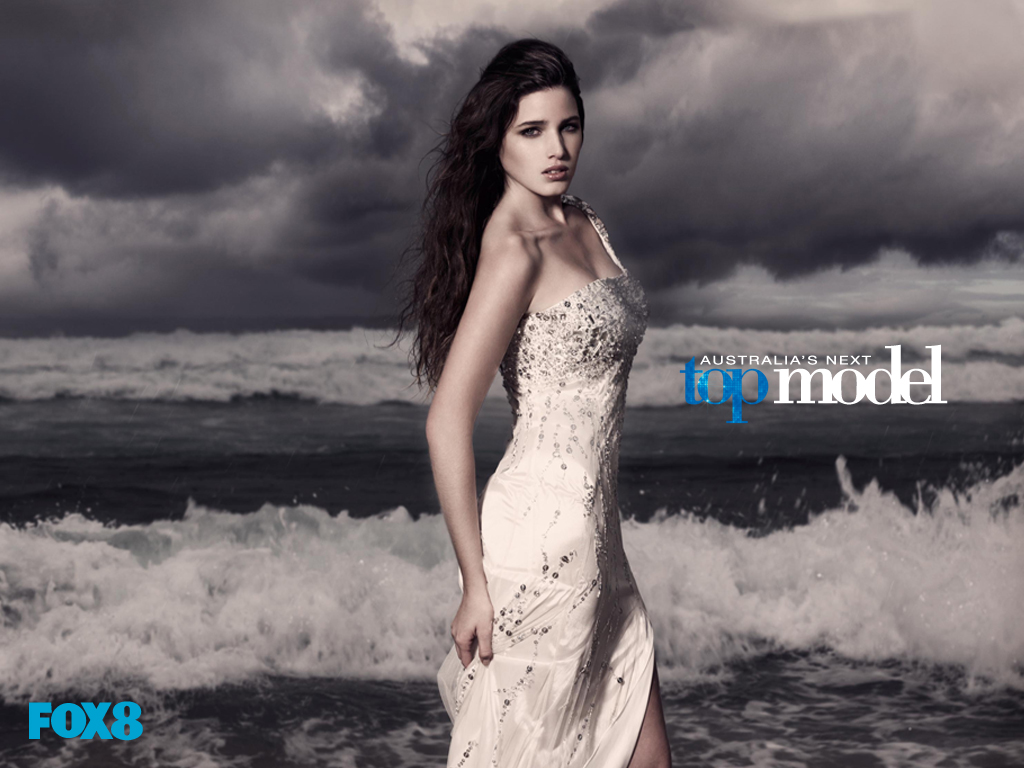
I adored the final photo-shoot, by Jez Smith; the banner photo of Tahnee was my absolute favourite of the series. I love how the background, all crashing waves and ominous clouds, is ultra-dramatic yet Tahnee, in her beautiful buy-me gown, is so serenely lushly beautiful. The greyscale effect adds a romantic, timeless quality; basically, wow. Claire and Cassi aren’t looking too shabby in theirs either – I particularly adore how vulnerable and bare Claire looks whilst Cassi, for all her flaws, really is an Oz Kate Moss.

The desert shoot, by Russell James, was just stunning (top to bottom: Tahnee, Adele, Franky, Cassi, Clare, Lola). You can always tell the good photographers from the bad when every single girl manages to look great (I now always look out for James on these shows as his work is so consistent). I love how these photos tell a story, that the setting looks cinematic in its stark baking beauty, that the colours are so vivid and that there are more fierce eyes going on here than Tyra has managed in a whole career. Most importantly, the girls’ bodies are smokin’, the styling is fantastic and the end result is an amazing strong but sexy look. The heat practically ripples off the celluloid.

It certainly beats seeing Tyra’s minions endlessly recreate the ‘Broken Down Doll’ pose whilst pretending to be a slab of meat at an abattoir, don’t you think?

Zaia, Cirque du Soleil @ The Venetian, Macau review

Given that Cirque du Soleil is just about the only internationally-renowned circus troupe that the average Joe Bloggs could name, the company must be doing something right. After seeing Zaia, Cirque du Soleil’s resident show at The Venetian hotel in Macau, I have some idea what they are doing right – but also, plenty of what they’re doing wrong too.

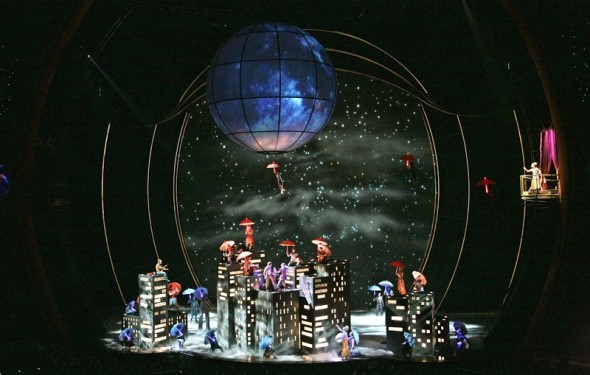
Scoring a unique and exclusive Cirque du Soleil show is a major coup for Macau, a city desperately trying to turn itself from ‘humdrum island offering gambling 24/7’ to ‘Las Vegas style entertainment-destination offering gambling 24/7’ with varying degrees of success. The Zaia theatre was custom-built for the show and the results are spectacular – I daresay there’s not a bad seat in the house and the performers utilise the space to within an inch of its life, with performers floating and flying overhead throughout. Coupled with an equally impressive stage that sees colourful characters and intricate sets emerging from just about every direction imaginable, plus the trademark Cirque du Soleil flamboyant costumes and make-up, it’s a visual feast. Sometimes too much of a feast; when dancers are even strutting their stuff in the sound booths, you know there’s perhaps too much going on!

The story is practically summed up in the show’s advertising leaflets – a girl’s voyage of discovery through mysterious and beautiful galaxies, peopled (coincidentally, I’m sure!) with folk that just happen to boast a wide array of astonishing circus skills. The people I went to see Zaia with complained that they didn’t see much of this so-called storyline, a plot that would barely be enough to sustain a television commercial, let alone a 90-minute stage show. It’s basically an excuse for Cirque du Soleil to wheel on various sets and performers, strung together with a clunky narrative thread that sees the girl (the eponymous Zaia) ferried across the auditorium various times in a balloon as she watches these scenes. There are occasional appearances by a polar bear (explainable only for the cute merchandise opportunities he offers) and a clown tiresomely touting a giant egg – when the thing finally cracks at the end, the sense of anticlimax was palpable. Let’s just say J K Rowling probably won’t be on the phone to Cirque for new story ideas.

The acts range in quality and, sadly, competence. I wasn’t fussed about seeing some guys juggle for far too long, even if they were using glo-in-the-dark equipment. A potentially great trapeze act was marred by the acrobats spending more time in the net than they did flying through the air; by the end, we weren’t sure who was falling off intentionally and who just wasn’t very good. A trampoline act takes ages to set up but didn’t meet expectations whilst a troupe of fire-dancers are similar to the ones in Hong Kong Disneyland’s Lion King show, except the latter perform with a lot more enthusiasm and the bonus of catchy Disney songs to accompany their flame-twirling. And you know there’s gotta be more interesting things to watch on stage than the bloke whose main skill seems to be the ability to ermm… skip really really fast.

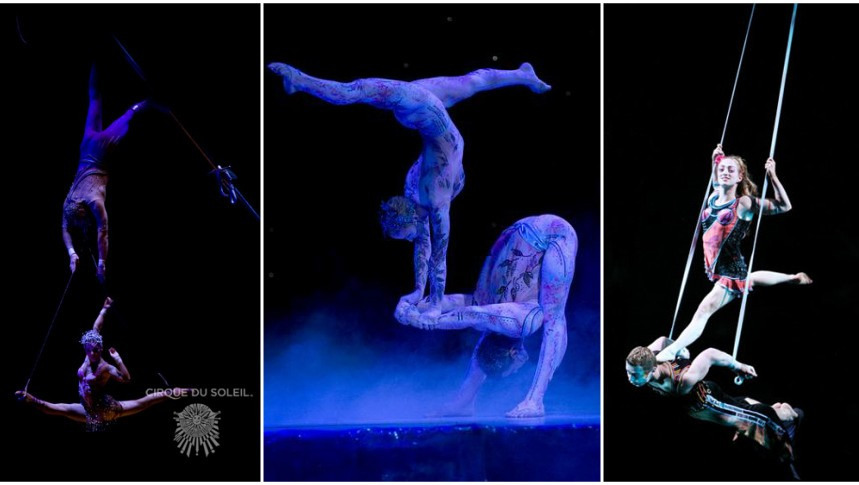
Sometimes less is more. The best performance came right at the beginning, with a breath-taking acrobatic display by a couple hanging from a pole dangling precariously from the ceiling as their only prop. They pulled shapes I couldn’t even manage on a flat surface. There’s another graceful pair of Arctic-looking acrobats who balance on each other in an impressively fluid series of figures that move seamlessly from one pose to another, and an aerial dance between Zaia and a glitter-encrusted lad that soars above in an expression of love.

These latter acts were the only ones that came anything close to evoking an emotion in me, capturing some element of sensuality and romance coupled with wide-eyed wonder at their athletic prowess. There’s also fun audience interaction at the beginning, as performers mingle with the audience in good-humoured skits but it’s light relief that’s over far too soon. The rest of the show is too po-faced by half, a sombre display of ‘aren’t we good?’ acrobatics, scored by Enya-lite warbling in a made-up (and frankly, irritating) language.

In Asia, where your elderly next-door neighbour could bust out a cartwheel on demand and the only special occasion needed to unleash pyrotechnics is that it’s a day of the week ending in ‘y’, there must to be some major wow factor on show for Zaia to really impress. Although it has this in terms of its aesthetic values, there are only fitful displays of true jaw-dropping acrobatic excellence whilst a compelling story or emotional depth, which could have set Zaia apart from its more mechanical competitors, are not dished up in plentiful portions either.

Overall Zaia, though nowhere near as phenomenal as it believes itself to be, provides a solid night’s entertainment and a welcome diversion from Macau’s grubbier charms. However, with similar attractions opening soon, it’s not one I have any desire to sit (or snooze) my way through again. Zaia may find that her ‘voyage of discovery’ in Macau doesn’t last nearly as long as she was hoping.

UPDATE: Rach proved right! Zaia closed early in February 2012. Check out my review of Cirque du Soleil’s Michael Jackson: The Immortal World Tour here.

Zaia is on at The Venetian Hotel, Macau, every night except Wednesdays at 8pm, weekend matinees at 5pm. Tickets cost $388-788, matinees $188-588, with discount packages available.

Photos from Cirque du Soleil’s  Zaia website.

Benefit That Gal primer review

Let’s have some light bright relief from all the murders with a new beauty review, and they don’t come much lighter, brighter and better than Benefit’s That Gal primer.

You may remember, I snagged one of these in the exclusive Hong Kong 5th anniversary gift set and I confess, thus far it’s the only one I’ve actually opened yet. What can I say?! I just can’t bear to part with that pretty packaging!

Good job I managed it for That Gal though – it’s a fantastic product. If you’re unfamiliar with primers, let me introduce you to your new best friend. Especially beneficial for hot humid summers (are there any others in HK?!), primer is essentially a base that provides a smooth surface for your make-up and helps keep it in check throughout the day. The difference is immediately obvious to the touch both when you put your make-up on (it glides on so much more smoothly and evenly) and when you take it off at the end of the day (there’s still lots left to remove, even after a sweaty 8 hours in the sun!).

Some people have complained that primers clog up their pores but I’ve actually experienced the opposite effect – primers being far less heavy than the products that go on top of it, I’ve noticed my pores actually seem to be in better shape, especially if you apply it after moisturiser but before foundation (or in my case, tinted moisturiser).

benefit that gal primer

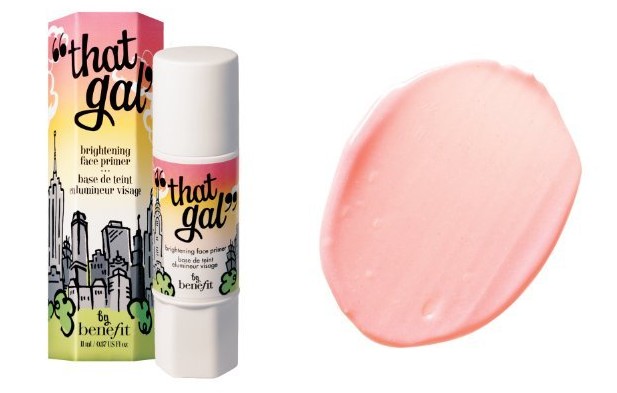
That Gal boasts all these great benefits of a primer and more, delivering on their promise of taking you ‘from dull to darling’. It feels much lighter than other primers I’ve used in the past and glides on really smoothly, easily and evenly, with a pleasant floral/fruity scent. Its shimmery pink colour (similar to Benefit’s High Beam) adds just the right amount of dewy radiance to your skin, visibly brightening your complexion and adding a healthy glow that works pretty nicely on its own, even without a further tint on top. AND it comes in a small but perfectly-formed container, featuring an ultra-convenient non-messy method of dispensing, whereby you twist the base and product comes out the top in small amounts, allowing you to sweep it on with your fingertips.

Used almost daily, one tube of That Gal lasted me about 4 months (not as long as I hoped) and the nature of the dispenser means you can’t predict when it’s on its last legs – so have a primer spare unless you wanna be left high and dry! But as ever with Benefit, one of my hero brands, it’s a happy marriage between lovely packaging and fantastic quality. That Gal is here to stay!

Benefit That Gal primer, $280 for 11ml

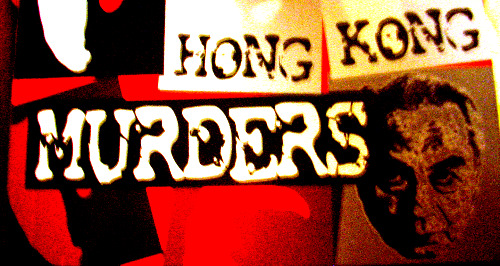
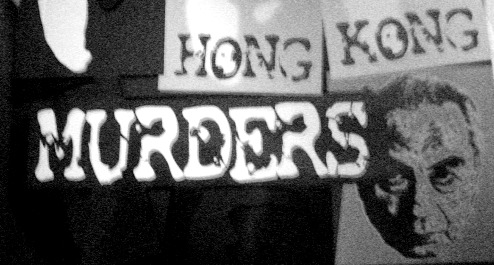
Hong Kong Murders: The Braemar Hill murders

Even now, the Braemar Hill double-murder provokes sadness and horror over twenty years after it happened, not just for the brutality shown to its teenage victims but also for the fact that this continues to be one of the only murder cases to involve the expat community in HK.

This was back in the old days, when colonial Hong Kong was still very much in its pomp. Kenneth McBride, 17, and his 18 year-old girlfriend Nicola Myers failed to return home after an al fresco revision session on Braemar Hill one April afternoon in 1985. The next morning, an unfortunate hiker made the grisly discovery of their badly-beaten bodies.

Braemar Hill, a luxury residential area and beauty spot, was an unlikely scene for a crime and Westerners were unlikely victims. Violence was usually confined to the triads and any previous murders in HK had been strictly local affairs. Kenneth and Nicola’s deaths sparked a huge police hunt, the scale of which HK has never seen before or since, with around 600 police officers and soldiers from the British garrison combing the area for clues, plus an aerial search by helicopter.

Whitehead fails to expand sufficiently on the issues this raises, whether through tact or wishful thinking. Her discussion that the investigation wouldn’t have commanded the same amount of manpower if the victims were Chinese is over in one sentence, and even then she qualifies it with ‘that’s not to say the case wouldn‘t have been thoroughly investigated’. Her later revelations that there was a reward for $500,000 (the largest in HK’s homicide history and a bounty that seems to have been lacking in the case of the prolific Tuen Mun Rapist) and that the Chinese press accused the police of racism, complaining about the unnecessary level of spending and use of manpower on the case, are relayed to the reader in such a colourless manner that she fails to convey the strength of public feeling about the case, which there evidently was given how widely-remembered it is even now. One HK blogger remembers blurting out “Can you imagine the Government going to all this trouble if it had been a couple of Chinese kids from a public housing estate in Kowloon?”; it’s certain he wasn’t the only one thinking it. In those days, most senior officials were expats, the them/us divide was more obvious and the one of the most shocking aspects of this shocking case was that such a thing could happen to expats in their self-anointed paradise in the first place.

The murders themselves had been brutal. Kenneth had been bound, beaten and suffocated. He had more than 100 injuries on his body. Nicola had 500. She was also bound, almost naked, had been raped and clearly tortured for a greater length of time. These brief details are horrific enough but had more been provided in Whitehead’s narrative, I feel it would have supported the assertion that police devoted such resources to the case because of the violence of the murders and not the race of the victims. It would also have helped the reader understand the true depravity of this crime and why people still shudder when it’s mentioned today.

The Chinese information reveals more – that Kenneth was strung up, beaten and strangled with an arm-sling that he was wearing, that he had obviously put up a painful struggle, that both were beaten brutally with branches, that the gang thrust a stick and a bottle into Nicola’s genitalia, that her jaw was broken, her left eyeball was out its socket, that she had an expression of terrible suffering on her face. Yes, these details are truly terrible but I think they’re important to highlight the utter heinousness of this crime. I was reminded of the James Bulger case, where a long list of the sickening specifics behind his torture were released, and which I think of every time discussion of his killers crops up in the media. It is easy for people to dismiss numbers and vague generalisations of ‘bruises’ and ‘lacerations’, less so when there is some sickening bloody detail that lodges itself into your consciousness. It also indicates that Whitehead’s categorisation of the case as a ‘Sex Crime’ is flawed – the sexual element, though awful, is hardly the most significant element of or motivating factor behind the crime.

It took eight months for the culprits to be found, despite the wealth of evidence discovered at the scene (including Nicola’s torn clothing and personal effects, including pictures of life in London); forensic technology was still in its infancy and a bloodied branch with Nicola’s hair on was unsuccessfully analysed for fingerprints (there is a suggestion that the evidence was compromised by police unknowingly handling it). Superstitious HKers were spooked when one potential witness, under hypnosis by the police psychologist, began to speak more fluent English, although she only spoke broken English with a Chinese accent in real life – people believed she had been possessed by Nicola’s ghost.

It was sheer luck that an informant overheard a youth (Pang Shun-yee) boasting to his gang that he had killed a Western couple, proving it with the fact that he was wearing Kenneth’s trainers. Following their arrest, the youngest member of the gang, 15 year-old Won Sam-lung, duly confessed.

The confession is raked over only briefly in Whitehead’s account. Won said the gang spotted the couple and decided to ‘have some fun’ with them, asking if they had any money. They didn’t, were tied up and one of the group ‘sprang onto the woman like a hungry dog’. [Chinese information suggests that Pang asked Nicola to have sex with him and on her refusal, dragged her down the hill to rape her and threatened the rest of the gang to do likewise.] Pang decided they kill them, lest the pair identify them later, murdering Kenneth first before turning to Nicola. They tortured her for ‘dozens of minutes’ (the autopsy results suggest significantly longer as she died at least an hour after Kenneth) but when the gang left, she was still breathing faintly. Having witnessed the terrifying murder of her boyfriend and then been brutally raped and tortured herself, she lingered on only to die alone.

It says much about Whitehead’s lack of detail that we only learn the rest of the gang’s names in her penultimate paragraph and although she states that another of the gang confessed, we are told only one sentence of his account (this conflicts with more recent news reports that Won, who has since been released, was the only one who admitted his guilt and regularly had nightmares about his part in the murder). We never hear about the gang’s background, whether they had committed any crimes before or what drove them to such extremes for this one. We never hear the voices of the gang members who denied their involvement (later appealing against their sentences) or of Pang, whom the two confessions fingered as ringleader. One source claims that some denied raping Nicola at trial even when forensic evidence clearly proved the contrary was true. Similarly, although we learn that the case was disturbing enough to prompt the chief investigating officer, Norrie MacKillop, to quit homicide, we never learn any of his private thoughts or suppositions about the case or its perpetrators.

kenneth mcbride nicola myers braemar hill murders

However, the biggest disservice in Whitehead’s account is done to her young victims, who frankly deserve better. They warrant a mere paragraph which talks about their good looks (sans photo), clunkily linking them with some guff about seeing ‘beyond the narrow confines of a fast-decaying colonialism’ and giving no feeling of the absolute sense of loss felt by all who knew them. They were popular figures at Island School, something of a golden couple – members of the debating and rowing teams, Kenneth the president of the Students Union, who would write poetry to each other on the school roof. Former schoolmates looked up to ‘warm, bright and sunny’ Nicola (‘I wanted to grow up and be just like her’); Chris Forse, a teacher of theirs, remembers Kenneth speaking stirringly about apartheid in the school assembly the day before his death and how the rowing and debating teams went on to win in the wake of their murders – ‘was it that beam of light from the heavens?’ David James, vice-principal at the time, recalls Kenneth rallying the school to knit squares for Soweto (‘I remember him, knitting all those squares’); Kenneth’s sister, Marion (who resembles her brother so much that her parents often say ‘You look just like Kenneth when you did that’) laughs when she remembers how Kenneth and Nicola wanted to raise money for Ethiopia by gathering toys and clothes, but the parcel was so big that they didn’t have enough money for postage. ‘And I remember coming home and there was Kenneth baking cakes, and there was a smell of burned cakes in the house, and he just made all these cakes, had a cake sale the next day and that’s how they got the money for the stamps.’

Forse still keeps photos of Kenneth and Nicola and remembers his shock on hearing the news (‘I couldn’t really accept what I heard, or even continue with the conversation… I remember putting the telephone down and saying “Sorry, I can’t deal with it”); the school was overwhelmed with silence, sadness and as James says, ‘such grief… grief you could never imagine happening in a school… you don’t know what to do.’

Twenty-five years later and everyone who knew them still remembers them vividly, with a smile, fondness, warmth and sadness. It was reading these memories and seeing fuzzy photos of them looking young, bright, hopeful and idealistic that made this not just a bloody statistic in a book but a real and human tragedy, making me cry for people who died before I was even born. As Forse writes, we should ‘regret their missing years, remember their former glories and know that they will always be, in our eyes, forever young.’

Given the character of the victims, it is fitting that there is still some hope to be salvaged. Island School set up the Kenneth McBride & Nicola Myers Memorial Fund (partly-raised by students and presented for many years by Kenneth’s parents, then sister) awarding scholarships to students who would struggle financially to continue on to secondary education. The Myers and McBride families have remained close – the only time the Myers’ returned to HK after the murders was to attend the wedding of Kenneth’s sister. Won Sam-lung was released in 2004, not only with the McBrides’ blessing but incredibly, their forgiveness. He wanted to make personal apologies to the families for the ‘enormous sorrow’ he had caused, knows in his whole life he can never ‘compensate them for what they have lost’ and says, ‘I found it hard to understand being forgiven. It shocked me, but it also told me that love can change a person.’

Hong Kong may still have one of the lowest homicide rates in the world but the murders of Kenneth McBride and Nicola Myers were a harsh awakening for many. Previously, the fragrant harbour had seemed a safe escape from UK life but these deaths marked a loss of innocence for a whole generation and proved that expats were not untouchable. It is a case that will live on in history books for years to come but I hope that alongside every mention of sickening brutality and cultural landmarks, there is some tribute to the exceptional lives that were lost. The reader deserves to know, and Kenneth and Nicola deserve to be remembered. It is the least we can do for two people who will always remain forever young.

Sources:

Hong Kong Murders – an introduction

I’m hoping some people find the subject of Hong Kong Murders as interesting as I do, or else the next few posts will be really boring. As I said in my review, English-language information is difficult to find on the Internet so these posts are for those, like me, who tried to Google ‘Jars Killer’ and ‘Tuen Mun Rapist’ without much luck – and who don’t wish to spend $135 on the book like I did! I also want to specify the things that I think are missing from Whitehead’s account – maybe some reader will one day go on to write a more exhaustive study and answer my questions!

Apart from Whitehead’s book, my sources begin and end with the powers of the Web, with specific URLs given at the end of each post. That isn’t to say I haven’t dedicated a lot of time to them – my first post, about the Braemar Hill murders, has taken me days to put together. For the copious amounts of Chinese information available, I used a combination of Google Translate and my friend Adrian’s translation skills (which aren’t as good as he claimed fyi); however, there’s some difficulty in checking the veracity of these sources. Obviously they have all stemmed from some published source, given that they are ad verbatim copy-and-paste jobs, but what that source is I can’t work out. Over the years, there have also been a number of ‘True Crime’ docu-dramas on radio, television and film so it’s difficult the accuracy of these portrayals and whether they have coloured any of the Chinese accounts. I’ve given the information I found the benefit of the doubt but you’re welcome to make up your own minds.

Hong Kong Murders – Kate Whitehead review

Before my boyfriend became my boyfriend and was doing his best to scare me into soliciting his company, he told me about a HK murderer who killed female passengers in his taxi, thus ensuring I never wanted to travel alone in one again. That murderer was the infamous ‘Jars Killer’ and ever since I learnt the gory details of that case, I’ve been intrigued about what other murders may have occurred in this fair city. Enter Hong Kong Murders by Kate Whitehead.

Asking after Hong Kong Murders in bookshops lead to a few strange looks, especially as Whitehead’s other book is called Sex After Suzie Wong, making my reading tastes look somewhat deviant. I find murder interesting, partly because my father was a retired detective and partly because so few occur in Hong Kong (one of the lowest homicide rates in the world – especially if you’re not a triad) that I wanted to know more about the few that had occurred and what went behind them.

With many of the cases from decades gone by and with few involving Westerners, English-language information on the interwebz was scant and Whitehead’s book was the only literature I came across on the subject. Alas, for a book entitled Hong Kong Murders, one was a suicide, two were kidnappings gone wrong, one occurred in Macau and at least six involved either gangs or triads, who are a different kettle of (garoupa)fish entirely. The two listed under ‘sex crimes’ were really nothing of the sort and by then, we’re left with all of about four genuinely interesting murder cases.

Whitehead, however, does her best to make them as uninteresting as possible. Her background in news journalism comes through – her writing is dry, factual and rather bland. Whilst this avoids making the book sensationalist when many of the stories could easily go that way, it manages to turn gripping cases into almost anything but. Having now finished Hong Kong Murders, I’m pretty sure I could write a better book using the information from just the book alone! That’s not to say my attempt would be much better; Whitehead frequently fails to go into enough depth. We feel little empathy for the victims as their backgrounds are not detailed, we learn little about possible motivations for the murders and we get little insight from any figures within the cases – be they investigating officers, families of victims/murderers or even the perpetrators themselves, criminal psychologists, journalists covering the events at the time, lawyers, barristers, someone, anyone! The lack of depth is really frustrating, especially as it’s clear Whitehead has actually done the research and spoken to such people, but their voices are relegated to comments so short and sparse that they’re instantly forgettable.

The blurb also promises that Whitehead will reveal the “cultural fingerprints” which ‘shed light on the psyche of Hong Kong’ but the cultural context she gives is so basic and rudimentary that practically anyone who’s lived in HK for a longer than a fortnight would be aware of such information. We are treated to amazing insights like HK people don’t like to get involved (just travel on the MTR and try to make eye contact with anyone to see how that works), that the city revolves around money, that attitudes toward sexuality are suppressed and that triads exist and have customs. Wow. Enlightening.

The triad cases in particular are bogged down with detail. Names, nicknames and even more names make them confusing and it’s clear that they belong to a completely different book. Triad violence and murders are hardly surprising but of modest concern to outsiders; as one story details, when non-triads were hurt during turf wars, the boss rang up to express concern and say ‘this shouldn’t have happened’. The message is obvious – don’t get involved and you’re unlikely to fall foul of the triads’ chopper. There are countless films, novels and non-fiction books written about the triads that I imagine have superior knowledge of their rituals, and with such crimes still relatively commonplace (one gang member was run over and hacked at outside the Shangri-La in Tsim Sha Tsui only a few years back), I found these pieces the least interesting. Just go watch the Infernal Affairs trilogy, instead.

Kudos to Whitehead for still being the only book about what is a fascinating subject, but reading it leaves so many unanswered questions that it becomes a frustrating experience. With plenty of recent high-profile cases (the “Hello Kitty Murder”, Nancy Kissel and the “Milkshake Murder”, the disappearance of Ani Ashekian… only last week, a corpse was discovered in a suitcase in Yuen Long), the time is ripe for someone to re-visit this subject matter and produce a comprehensive study. Now who’s offering?

3/5

Hong Kong Murders, Kate Whitehead (Oxford University Press, 2001), $135, Page One

P.S. I think it says much for Whitehead’s, or her editor’s, lack of depth that I’m not even sure who the evil guy on the front cover is or whether he’s even real or not!

HK gets nutritional: 1 + 7 = catsuit?

After being terrorised by hands coming out from eye sockets, here’s the latest MTR advert to amuse and bemuse.

It’s to mark the advent of the new food labelling system in HK, which detail nutritional information in categories (much like the ones that have been in the UK for a while).

The snazzy slogan to promote this new law is ‘1+7’. Why not just say 8? Is this HK’s reputation for arithmetic aptitude taking it one step too far?

And why have they decided that the obvious way to help us remember this is to dress seven unsuspecting children and one helpless adult in white body-suits? Are we meant to pick our favourite smiling munchkin and thus remember that she represents sodium? No doubt they’ll soon start producing collectible toys of the whole set a la the perennially popular Happy Meals and sold-out sets at 7-11 and Circle K.

Why are the ‘saturated fat’ and ‘trans fat’ ones looking so happy – has no-one told them that they’re the baddies and should thus be represented with devil horns and forked tail? Couldn’t we at least have some Saturdays-style colour-coding scheme or some seven dwarf-style catchy nicknames to make the whole thing more memorable?

HK government marketing division – you can thank me later.

Edit: Have just figured out what they remind me of – the sperm from Woody Allen’s Everything You Always Wanted To Know About Sex, But Were Afraid To Ask. I’m fairly sure the HK Government would die if they realised this.

Advert from http://www.nutritionlabel.gov.hk

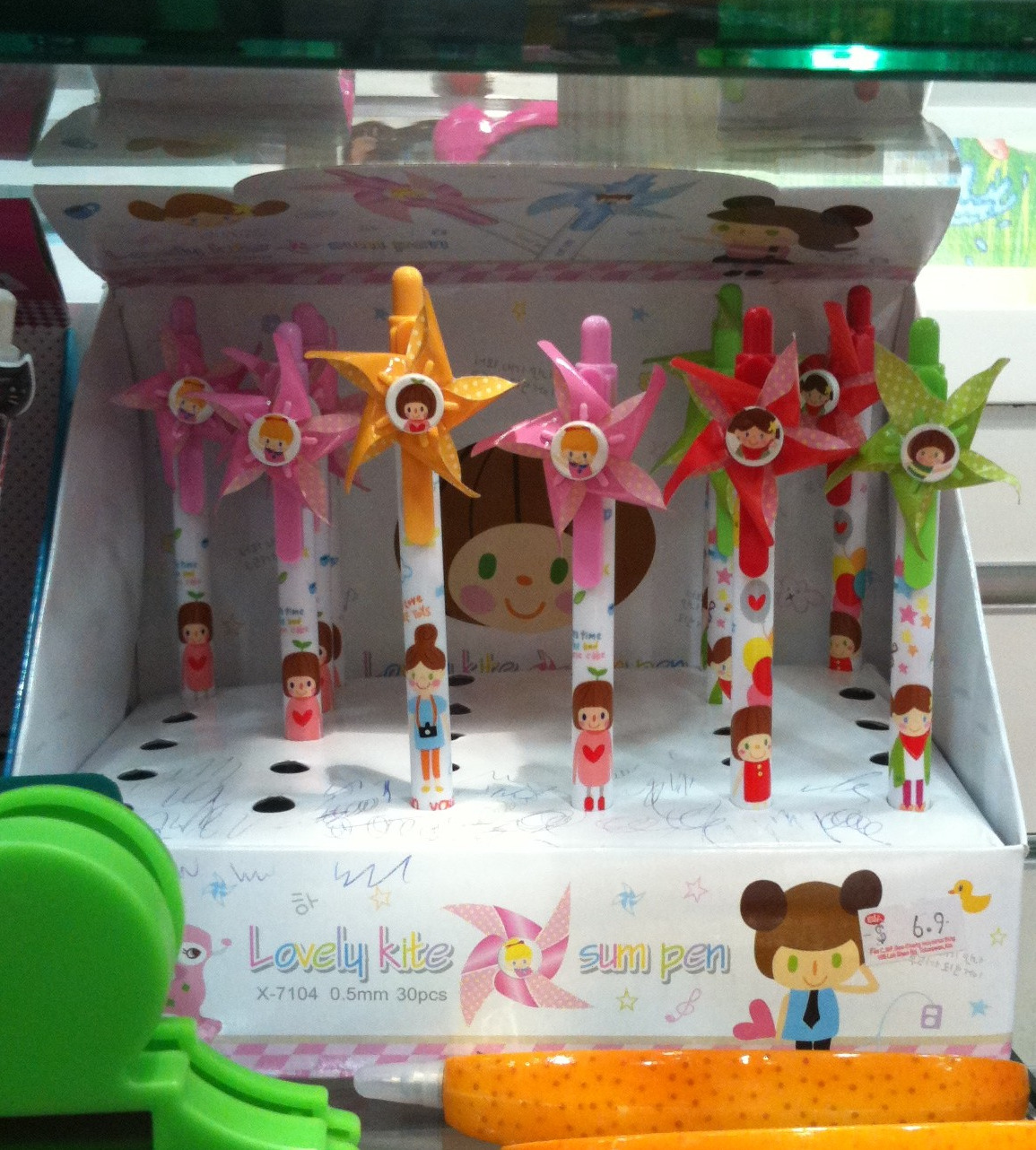
Windmills of my mind

I promised you more pretty things and here they are:

So pretty! I love the colourful cute designs on the body of the pens as well.

Again, from Ella, this time for a mere $6.9. Beauty plus functionality and the ability to tell if a typhoon’s brewing – what more could you ask for from a humble biro?!