Category Archives: Culture

Hong Kong Murders – Kate Whitehead review

Before my boyfriend became my boyfriend and was doing his best to scare me into soliciting his company, he told me about a HK murderer who killed female passengers in his taxi, thus ensuring I never wanted to travel alone in one again. That murderer was the infamous ‘Jars Killer’ and ever since I learnt the gory details of that case, I’ve been intrigued about what other murders may have occurred in this fair city. Enter Hong Kong Murders by Kate Whitehead.

Asking after Hong Kong Murders in bookshops lead to a few strange looks, especially as Whitehead’s other book is called Sex After Suzie Wong, making my reading tastes look somewhat deviant. I find murder interesting, partly because my father was a retired detective and partly because so few occur in Hong Kong (one of the lowest homicide rates in the world – especially if you’re not a triad) that I wanted to know more about the few that had occurred and what went behind them.

With many of the cases from decades gone by and with few involving Westerners, English-language information on the interwebz was scant and Whitehead’s book was the only literature I came across on the subject. Alas, for a book entitled Hong Kong Murders, one was a suicide, two were kidnappings gone wrong, one occurred in Macau and at least six involved either gangs or triads, who are a different kettle of (garoupa)fish entirely. The two listed under ‘sex crimes’ were really nothing of the sort and by then, we’re left with all of about four genuinely interesting murder cases.

Whitehead, however, does her best to make them as uninteresting as possible. Her background in news journalism comes through – her writing is dry, factual and rather bland. Whilst this avoids making the book sensationalist when many of the stories could easily go that way, it manages to turn gripping cases into almost anything but. Having now finished Hong Kong Murders, I’m pretty sure I could write a better book using the information from just the book alone! That’s not to say my attempt would be much better; Whitehead frequently fails to go into enough depth. We feel little empathy for the victims as their backgrounds are not detailed, we learn little about possible motivations for the murders and we get little insight from any figures within the cases – be they investigating officers, families of victims/murderers or even the perpetrators themselves, criminal psychologists, journalists covering the events at the time, lawyers, barristers, someone, anyone! The lack of depth is really frustrating, especially as it’s clear Whitehead has actually done the research and spoken to such people, but their voices are relegated to comments so short and sparse that they’re instantly forgettable.

The blurb also promises that Whitehead will reveal the “cultural fingerprints” which ‘shed light on the psyche of Hong Kong’ but the cultural context she gives is so basic and rudimentary that practically anyone who’s lived in HK for a longer than a fortnight would be aware of such information. We are treated to amazing insights like HK people don’t like to get involved (just travel on the MTR and try to make eye contact with anyone to see how that works), that the city revolves around money, that attitudes toward sexuality are suppressed and that triads exist and have customs. Wow. Enlightening.

The triad cases in particular are bogged down with detail. Names, nicknames and even more names make them confusing and it’s clear that they belong to a completely different book. Triad violence and murders are hardly surprising but of modest concern to outsiders; as one story details, when non-triads were hurt during turf wars, the boss rang up to express concern and say ‘this shouldn’t have happened’. The message is obvious – don’t get involved and you’re unlikely to fall foul of the triads’ chopper. There are countless films, novels and non-fiction books written about the triads that I imagine have superior knowledge of their rituals, and with such crimes still relatively commonplace (one gang member was run over and hacked at outside the Shangri-La in Tsim Sha Tsui only a few years back), I found these pieces the least interesting. Just go watch the Infernal Affairs trilogy, instead.

Kudos to Whitehead for still being the only book about what is a fascinating subject, but reading it leaves so many unanswered questions that it becomes a frustrating experience. With plenty of recent high-profile cases (the “Hello Kitty Murder”, Nancy Kissel and the “Milkshake Murder”, the disappearance of Ani Ashekian… only last week, a corpse was discovered in a suitcase in Yuen Long), the time is ripe for someone to re-visit this subject matter and produce a comprehensive study. Now who’s offering?

3/5

Hong Kong Murders, Kate Whitehead (Oxford University Press, 2001), $135, Page One

P.S. I think it says much for Whitehead’s, or her editor’s, lack of depth that I’m not even sure who the evil guy on the front cover is or whether he’s even real or not!

Great Forgotten Pop Songs: Supersister – Coffee

The days when pop acts could afford their own wind machines

All I know about early-noughties girl-band Supersister can be written on the back of a postage stamp. However, that information is so banal (their names were Tina, Louise and Eleanor and they came from Sheffield) that I’d prefer to use that postage stamp for better purposes. The Internet instead prefers to remember a Dutch progressive rock outfit called Supersister – and let’s just say that any unsuspecting fans of that group who accidentally stumble upon this Great Forgotten Pop Song may be in for a bit of a surprise.

Coffee is a frothy, spangly, camper than a Liza Minelli E! Special disco stomper. Coming just as the nineties’ pop bubble was about to burst, it’s a last hurrah for the days when having a vaguely presentable band who knew their way round a catchy chorus was enough to score you a guaranteed top twenty. Coffee is cheesier than a gameshow host’s grin and all the better for it; a big fat platform-booted choon with tongue firmly in cheek and shoe firmly on dancefloor (preferably at the local gay bar).

It basically takes a joke recycled from a thousand chick-lit novels, about liking your men like you like coffee (‘hot strong and sweet like toffee’), and turns it into a full-blown pop extravaganza. Occasionally, this would be witty (‘like caffeine, you kept me up all night’), occasionally, slightly but deliciously dirty (‘fill my cup ‘til it’s flowing down the sides’, ‘in popped my lover, pulled back the covers, cos I like my coffee with cream’) and once, even delightfully British in its references to beverages made with a kettle (‘you’re just my cup of tea’). Packing more puns than a Kathy Lette book/Jimmy Carr routine, there’s some more wordplay about boiling points, steaming and stirrings deep inside before you reach the majesty of the middle eight:

Men like my coffee really turn me on
Sometimes espresso, sometimes he’s too strong
Then there’s Costa Rican, mellow but he’s rich
But never give me instant cos baby, he’s too QUICK

Judging by this mini-opus within a pop song, I’m surprised no enterprising cod-theologist has created a self-help book based on comparing men to coffee à la Men Are From Mars.

Supersister may be forgotten but the time is right for Coffee to be rediscovered. Whether that’s by some coffee advertising hotshots, soulless chick-flick producers needing soundtrack filler or just those out to have a good time under the glitter of the discoball is irrelevant. Kettle’s on.

UK Chart Peak: 16
Key lyric: ‘Fill my cup ‘til it’s flowing down the sides!’
Get more late nineties/early noughties girlie cheesy pop : Atomic Kitten – I Want Your Love, Gina G – Ooh Aah… Just A Little Bit, Girl Thing – Last One Standing

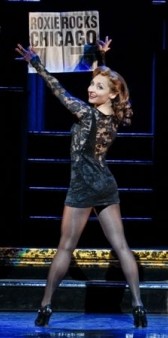
Chicago: The Musical @ HKAPA review

Usually, touring productions are to their West End equivalent what Joey was to Friends, The New Class to Saved By The Bell, Joanie Loves Chaaci to Happy Days – diluted, cheaper, less-good versions of the original. So it’s with relief and joy that I can declare that Lunchbox Productions’ Chicago, playing at the HKAPA’s Lyric Theatre until June 20, is defiantly not a case of the above. This version of Chicago would more than happily stand on its own fishnet-clad legs on a London stage. With added jazz hands, of course.

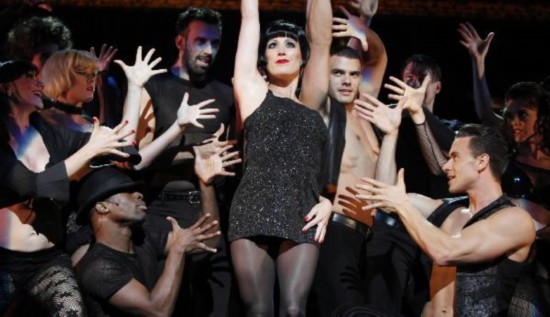
As always with anything Bob Fosse touched, it’s the choreography that’s the star. The ensemble here are fabulous – sexy, sinuous, slinky and with the perfect Fosse hands. I’ve seen the All That Jazz routine countless times but this may just have been the best yet and they are darkly mesmerising throughout, occasionally to the detriment of the main characters and especially brilliant in the courtroom scenes and the eye-popping acrobatics of Razzle Dazzle. It’s a show in which the ensemble are more than just a chorus line; getting involved in the action with a multitude of bit-parts, they deliver practically as many laughs as the main characters.

In fact, my only criticism – and I really am nit-picking as a seasoned musical-goer – is that there were possibly a few too many laughs (even if poor comic timing means that the cast don’t milk nearly enough from usual standout number, Cell Block Tango). As a show about the cult of celebrity, notoriety and ambition, Kander & Ebb’s writing has much to offer a modern audience yet I felt that this production sometimes took the easy route towards the funny bone. Sharon Millerchip’s Roxie Hart has all the ingredients to be the star of the show – a natural wide-eyed charm, bright vocals and the ability to light up the stage whilst hoofing with the best of them (I particularly enjoyed her rendition of Me And My Baby whilst the ventriloquist’s dummy act in We Both Reached For The Gun never fails to delight) – but I’d have liked to see her rely less on her obvious gift for physical comedy in some of her solos.

Deone Zanotto’s Velma Kelly has a wonderfully brassy voice and brings a suitably brassy edge to her performance but I felt she had more to give on two renowned Fosse workouts, I Can’t Do It Alone and When Velma Takes The Stand. Meanwhile, Craig McLachlan’s (Henry Ramsay of the bad 80s perm on Neighbours) silver-tongued lawyer, Billy Flynn, gets lost to the brilliance of the dancers – a few more charisma classes required – and I didn’t feel all that safe with his vocals, either.

The live orchestra is on-stage throughout and cleverly worked into proceedings (conductor Ben Van Tieden is particularly good value for money) and they bring a real energy to proceedings, garnering some of the biggest cheers of the night – as do D C Harlock’s Mary Sunshine and the empathetically dopey Damien Birmingham, as Roxie’s husband Amos (hopefully not just because he was singing ‘that song off Glee’, Mr Cellophane).

Overall, it’s a tremendous night’s entertainment that barely puts a foot (or note) wrong. Chicago may lack the warmth of other big-event musicals, yet more than makes up for it with a grown-up cold-blooded wit and sense of its own theatricality that makes it unique. As one of the few big international productions to grace HK’s shores, I can think of no better cast to have introduced the pleasures of Fosse to our audience. It delivers that trademark razzle-dazzle in spades. With added jazz hands, of course.

8/10

Lunchbox Productions’ Chicago: The Musical is at the Lyric Theatre, Hong Kong Academy of Performing Arts until June 20. Tickets, priced $350-895, available from HK Ticketing, 3128 8288 or online.

Great Forgotten Pop Songs: Alexis Strum – It Could Be You

Poor old Alexis Strum. The eternal bridesmaid of British pop music, her whole back catalogue could feature in Great Forgotten Pop Songs Of Our Time. Leaving behind a trail of unreleased singles, shelved albums and general almost-but-not-quite-ness, Strum’s work still sounds as timeless and beautiful as it did when it was first (almost) released – making picking just one song to write about rather difficult.

Strum was first dropped after her more poppy debut single and album (the partly Xenomania-produced Addicted) never saw the light of day but come second album time, it looked like her fortunes might change. One song was made the theme tune to a much-hyped new ITV drama, she had a column on PopJustice, some old songs had been covered by Kylie and Rachel Stevens and the video for her lastest single, It Could Be You, was in the top ten most requested chart on The Box. Meanwhile, with the likes of Dido, Katie Melua, KT Tunstall and Lucie Silvas ruling the airwaves, it seemed that the market was ripe for talented female singer-songwriters. In a true mark of ‘making it’, I was even set to interview her!

Of course, in the great tradition of Britishness, this could only mean one thing – it would all go tits up. The release of It Could Be You was shelved, the release of parent album Cocoon was shelved, revised to feature the theme tune, then ummm… shelved again. Her record company couldn’t even get this right – both times, it was accidentally released to online stores, meaning us Strum devotees were able to legally purchase her material. And thank God for the record company’s ineptitude as Cocoon is a gem. (Needless to say and probably most crushingly for Strum, I didn’t get to interview her either).

(Sadly, there is no official trace of It Could Be You on Youtube… so here it is, relegated to soundtracking a Twilight fan video. Sigh)

It Could Be You is trademark Strum at her best. Her ballads, although lovelorn and haunting, are never boring, sappy or sickly-sweet; they burn with a sincerity and honesty that sets her apart from the rest of the field. Whilst lacking the booming Tedder-penned epic quality that has come to define a great ballad these days, Strum’s songs use interesting melodies and subtle synths to keep things interesting and although more than capable of writing a clever lyric (Bad Haircut, Nothing Good About This Goodbye), it’s the stunning simplicity of It Could Be You that makes it so easy to fall in love with.

‘Could I borrow your oxygen, I wanna breathe what you breathe’ is as arrestingly heart-stopping a first line as you could wish for. Yes, it’s an obvious reference to make (sanctimoniously declaring ‘you’re my oxygen’ is practically a requirement in ballads these days) but it perfectly captures that headlong rush of being in love. Strum’s vocals are always chillingly flawless but here, she shines with a delicate anguish on lines like ‘the kiss I almost taste’ and ‘the way your voice speaks to me inside/I cannot hide’.

It’s a simple idea, beautifully executed, with a dreamy quality that positively mists up your speakers.

Meanwhile, Alexis Strum (despite having a stonking name destined for pop) has given up music and is pursuing a career in acting. Well done, record companies. And my entirely legally-purchased music files no longer work because they were bought from Woolworths, which went bankrupt, taking my media usage rights with them. Well done, DRM copy-protection. In short, the only good thing left about this whole sorry affair is the music – and thankfully, very good music it is too. For anyone else, it wouldn’t be worth the trouble. For Strum, the struggles only add to its shadowy brilliance.

UK Chart Peak: Unreleased
Key lyrics: ‘Could I borrow your oxygen, I wanna breathe what you what breathe’
Get more: Alexis Strum – Nothing Good About This Goodbye, Bad Haircut, Stay Until Summer

Great Forgotten Pop Songs: Ainslie Henderson – Keep Me A Secret

There probably aren’t that many Top 5 singles that have been practically disowned by their singer/writer, especially when they are rather beautifully-crafted pop gems that most artists would be thrilled to have had a hand in. The next GREAT FORGOTTEN POP SONG OF OUR TIME (yes, the capitals are necessary to create that epic, booming voice feel) is Ainslie Henderson’s Keep Me A Secret.

Henderson was a contestant on the first series of BBC’s Fame Academy, the short-lived rival to ITV’s PopStars/Idol/X-Factor juggernaut. He was the ‘bad boy’ of the house for ummm… pushing over a Christmas tree (this was in the more innocent age of reality tv) and from what I remember, blamed his behaviour on feeling threatened by the also young, male, good-looking and Scottish eventual winner David Sneddon, which if you’ve seen David Sneddon is tantamount to feeling threatened by a pink fluffy teddy bear. Henderson was a little bit emo (possibly before the phrase emo was invented), played the guitar and would stomp about or clutch the microphone angstily when he performed, which meant he would probably never even have auditioned for the ultra-glossy ITV vehicles, let alone got as far as appearing at the live stages.

One of the major differences between the shows (apart from the dodgy decision by the Beeb to let the other contestants have the final vote at ‘evicting’ someone) was Fame Academy’s emphasis on creating an artist, rather than a *cough* karaoke *cough* singer. Sounds pretentious but it basically boiled down to getting the contestants writing their own material, which meant come release time, we didn’t just get a slew of covers (David Sneddon’s rather nice piano-driven debut album is wholly original, self-written songs). Keep Me A Secret, penned by Henderson himself and two other contestants, was a fruit of these labours.

Keep Me A Secret is a rare case of a pop song with indie sensibilities not being a complete abomination. It features a gorgeous fluttery strings section hook, some twinkly tambourine shimmers and a properly anthemic chorus, but it’s the song-writing that lifts it up to a higher plane of pop record. It’s a song where the lyrics are overtly all about doing your best not to fall in love, where the reality of the track is that you’re just about doing everything but. Henderson nails this through expression, both in his wonderfully longing vocal performance and the intoxicating manner of the lyrics.

Other songs would say ‘Don’t kiss me’; Henderson’s says ‘Keep my kisses off your lipsticks, stop me swallowing your charms’. This unusual way of spinning a line makes it more like poetry; it’s tactile, sensual and sexy, with lines like ‘sizzle when it’s face on face, skin on skin’ and ‘don’t let embraces linger, try to keep our arms untied’ bristling with a physicality that’s all the more stirring because it’s forbidden. Elsewhere, it’s the constant push-and-pull of the lyrics that drives it – ‘I’m trying to keep you out and I’m trying to keep me in’, ‘I’ll keep you out of my dreams if you keep me out of yours’ and the brilliantly-fashioned yearning of the middle eight that deserves to be quoted in it’s entirety: ‘All I’m asking/Is for nothing/And if nothing is enough for you/Oh leave it unsaid, keep it inside your head/Under your breath…’ (Henderson keeps that last note hanging with a desperate ache)

It’s not all great – there’s a dodgy bit around the second verse where Henderson rhymes mad with ermmm… mad that always makes me cringe. But for the most part, it’s truly gorgeous song-writing married with a charming sprightly melody.

Apparently, Henderson’s other songs were considered too risqué for a major label and Mercury dropped him before releasing a second single, let alone a whole album that would corrupt young ears. So proud is he of Keep Me A Secret that it doesn’t even feature on his self-released album, Growing Flowers By Candlelight, and has been airbrushed out of existence on his official site. He needn’t be ashamed. This is one secret I’m letting you in on – Keep Me A Secret is wonderful.

UK chart peak: 5
Key lyrics: ‘Keep my kisses off your lipstick, stop me swallowing your charms’; ‘Keep me out of my dreams, if you’ll keep me out of yours’
Get more not unattractive above-average boys with guitars: Alistair Griffin – Oblivion, Alex Gardner – I’m Not Mad

Don’t wake me up…

If there’s one thing guaranteed to make me feel like a 12 year-old again, it’s reminiscing over old-but-not-ancient tv shows. Especially the ones that aren’t actually the agreed ‘classics’ but the sort of not technically great but still holds a place in your heart stuff, that has the power to make one generation alone go goo-goo eyed yet cause blank stares and bemusement to everyone outside this narrow range.

So how are these pictures of the Saved By The Bell cast all grown-up for making you feel old? Take that, High School Musical, this will you be in 20 years!

In the UK, this used air at 9.25am on Channel 4. Oh, the days when I used to wake up at 9.25am through my own volition.

Zack Morris was my best friend Tom’s first gay crush. I wanted to be Kelly Kapowski but was probably always more of a Jessie Spano (sans the addiction to ‘I’m so excited! I’m so excited! I’m so…. scared’ caffeine pills). My Saved By The Bell tee from TruffleShuffle.com is the most commented-upon item in my wardrobe, eliciting knowing smiles and thumbs-up from random passers-by every time that I wear it (well, at least I hope that’s why they were smiling).

The cast look amazing and it makes my heart go all warm and fuzzy to see them back together again (this behind-the-scenes video is cute too). Of course, you’ll notice Screech is missing. In-between making porn, becoming a chess master and desperately flogging t-shirts on his website, I guess he was too busy. Or he just wasn’t pretty enough for this shoot. Or, given the number of years he clocked up with the SBTB franchise, he’s STILL working for Mr Belding.

Jimmy Fallon unsuccessfully tried to reunite the cast on his show (Screech and Tiffani ‘Kelly’ Thiessen didn’t sign up, although Thiessen released an odd viral about how busy she was which suggested that she was game), so I guess this photo shoot might be the closest we get. Although Mario Lopez (ah… those dimples are still cute as ever) does tantalisingly hint we might get a future reunion show later. Fallon’s attempts did result in this rather awesome interview with Zack Morris. He is STILL the coolest kid in school.

UPDATE: Come 2014, he finally managed to reunite four of the Bayside gang… I challenge you not to grin your way through this! And how do they all look EXACTLY THE SAME? Was there something magic in the water fountains at The Max?!

As a consolation present, Fallon instead reunited the California Dreams cast. HELL YEAH. In the UK, this would often air immediately after Saved By The Bell and was basically the same, except this lot were in a band (the ‘song an episode’ premise features in another childhood favourite obsession, Jem & The Holograms). It came from SBTB’s genius producer, Peter Engel who, once he’d found a successful formula, sure as hell stuck to it (Hang Time, Malibu CA, City Guys) – young attractive cast, cheesy jokes, “issues” episodes and a cavalier attitude to cast changes to keep the dead horse flogged for as long as humanely possible.

Again, the cast look sickeningly-good (possible because they’ve not exactly been exhausting themselves with work ever since) apart from the Latino one, who wore a leather jacket back in the day signalling his ‘bad boy’ character, and is now nearly unrecognisable (hang on, isn’t he Weevil in later seasons of Veronica Mars?!). Sly, the slightly rat-faced Tom Cruise-alike (couldn’t sing so became the band’s sleazy manager and of course, best character) even whips out the six-pack – oh, the desperation of out-of-work actors (not that I’m complaining).

But the real fangirl squeal is reserved for when the cast actually sing the theme tune (at 9.30 in the vid). Yes, these folks sung and played their instruments for real (although the badly-mimed, leotard frenzy that was the girls’ band in SBTB still remains a guilty pleasure that pops up way more often on my iPod than I’m ever going to admit).

I’m going to repeat – they sing the theme tune. Live. The warm fuzzy feeling produced by the SBTB photos just multiplied tenfold into a shivery happy glow. It’s actually a brilliant mellow theme song, which transports you instantly to laidback lounging on the beach. Amazing harmonies, evocative instrumentation, fantastic vocals (possibly in the days before Autotune existed). It’s actual theme song GOLD. In fact, let’s watch in all its full-length 90s glory – just wait for that guitar solo.

And it made me feel like a carefree child again for a few precious hours. These dreams *are* good.

Pictures: People Magazine

Great Forgotten Pop Songs: The Pipettes – Pull Shapes

If Pull Shapes has been released in the 60s, it would now be a Radio 2 staple, feature on countless crappy compilation albums and be one of those tunes that everyone inexplicably comes out the womb knowing. Instead, it had the misfortune to be released in 2006 and miserably limped in at number 26 on the charts. There are fewer greater injustices in pop because Pull Shapes is glorious, radiant life-affirming stuff. Goodness pours out of its every chord.

The Pipettes were a trio that specialised in homages to 60s’ girl group pop with their Phil Spector-created ‘wall of sound’. To hammer home this fact, they wore polka-dot dresses and did cute synchronised hand movements dances, which often made their schtick veer more closely to end-of-the-pier pastiche than the majesty of their tunes really needed them to. They’ve also gone enough line-up changes to cement their place in girl group history (as a girl group trio, they’ve now enjoyed the services of seven members and that’s not including the comings and goings of their backing band, The Casettes). I once wrote a brief history of the band and ended it with ‘no-one got divorced, beheaded or died’ which just about sums up the absurdity of the revolving doors of The Pipettes, as they’re now a duet of sisters with no 60s’ influences in sight (or should that be sound?!) yet Pull Shapes captures the group at their, possibly never to be attained again, peak.

From the opening thirty-five seconds of instrumental intro, you just know it’s going to be divine. Kicking off with a drum-roll (as all good things often do), sound upon sound is layered until a joyous trilling section marks the arrival of voices. The lyrics are inconsequential – simple, almost trivial chatter about liking disco, hearing drums and dancing (duh…) – but it’s all in the delivery. Whilst the current line-up may have the better harmonies, they’re not a patch on the combination of Gwenno (the only one still remaining), Rosay and RiotBecki for charisma. The verses are shouted with pure tangible joy and when the harmonies do kick in on the delightful chorus mixed with heady backing instrumentation, it’s just too delicious for words. Indeed, it can only be expressed through dance – good job they’re imploring you to ‘pull shapes’ (love it – so British) as you’ll no doubt find yourself busting out a little boogie, even in the full glare of public transport.

There’s then the appetite-whetting genius of the stop-start ‘What do you when the music stops?’ section and the always-a-winner audience interaction of ‘Clap your hands if you want some more!’ before the thing sprints to an ending that comes far too soon. There’s this giddy whirling noise that comes to the foreground on the penultimate chorus that is the exact sonic expression of how I feel when I hear Pull Shapes – dizzy with joy and high on life. And even though I said it’s over far too soon, it adheres to the Eurovision rule of the perfect 3 minutes; all the fat’s been trimmed, it ends with a bang rather than a fade-out and you find your finger twitching towards the ‘repeat’ button practically before it’s over.

Its retro stylings mean that it doesn’t get dated, instead merely cementing its position as a forgotten classic. After hearing it, you might (like my boyfriend) find yourself prone to yelling ‘Pull Shapes!’ at random moments. I wouldn’t have it any other way. Truly glorious life-affirming stuff. I’ll meet you on the dancefloor.

UK chart peak: 26
Key lyric: ‘I just wanna move, I don’t care what the song’s about!’
Get more: The Pipettes – ABC, Your Kisses Are Wasted On Me, Judy

Read my interview with The Pipettes here

Great Forgotten Pop Songs Of Our Time: An Introduction

I don’t really know if things can ever make a grand entrance on blogs but… TA-DA! New feature alert! Maybe an asterisk or two will make it look better so welcome to:

* GREAT FORGOTTEN POP SONGS OF OUR TIME *

It basically does what it says on the tin, so over time you can expect all the best flops, unloved album tracks, long-forgotten B-Sides and one-hit wonders to be gracing these pages. There will be a fair smattering of starlets apparently “big in Japan” (or, as is more likely with my music taste, Sweden), of records that weren’t as massive as they should have been or of ones that kinda were but were hastily filed away in the dusty drawers of the top 40 before anyone noticed. The Crazy In Loves, Toxics, Thrillers and Like A Prayers of the world have had enough words written about them (and deservedly so), but it’s time for their lesser-lauded cousins to have their moment in the sun. Admittedly a very small moment and a very dim sun, but hey I’m trying.

Hong Kong Museum of Coastal Defence – Escape to Waichow Exhibition: I’m talking bout a whole lotta history…

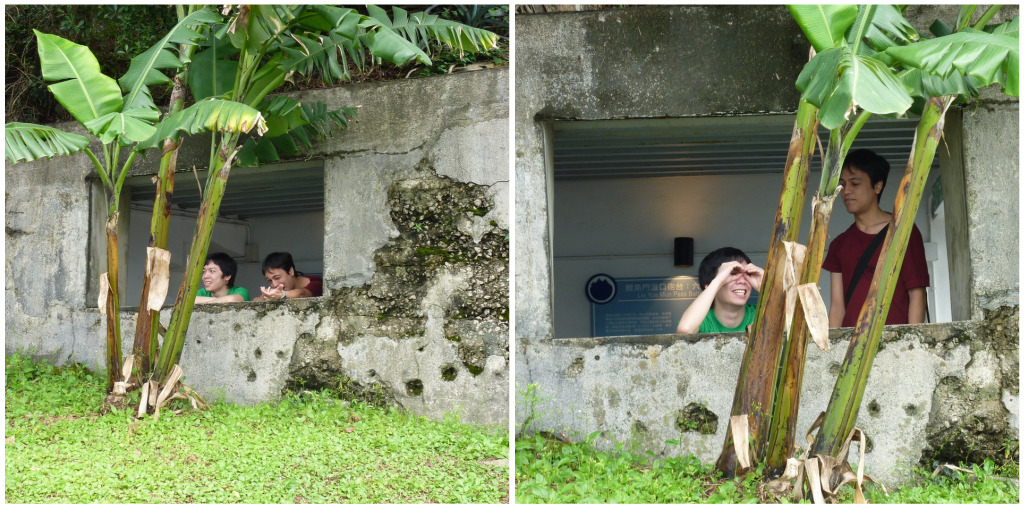
Boys will be boys…

One of the downsides of having a boyfriend with a history degree is that he is prone to parroting “interesting” history facts whenever we’re out and about town (to be fair, I do the same with Disney trivia and Girls Aloud lyrics, so I shouldn’t complain). Having put off a trip to the dryly-named Museum of Coastal Defence for practically as long as we’ve been going out, I finally capitulated last week.

Someone in HK’s marketing department is clearly missing a trick, as the place would much better (if not entirely politically correctly) be named Hong Kong’s Wartime museum, hence instantly snagging an instant demographic of 7-14 year old boys (or just boys in general… the two twentysomethings I went with loved it). Built around Lei Yue Mun fortifications, the museum details how Hong Kong has defended itself from various attacks, invaders and general baddies over the years. It’s a little short on actual exhibits because the exhibition is the place itself; get your walking boots on if you plan on exploring every caponier, ditch, underground magazine, battery, gun, jeep, cannon and ruined wall with visible bullet holes in. (The torpedo station is well worth a look though and the views, as seen below, over Lei Yue Mun and across the harbour are stunning).

What did strike me is that, despite HK’s frequent attempts to make itself ever newer and shinier (as evidenced by the many front page stories of the government trying to tear down historical buildings), history really is all around. The museum details the remains and ruins of all the other fortifications around Hong Kong that are around if you care to look. OK, it’s not the palaces, country houses and spectacular cathedrals that Britain excels at and exist even in some of the sleepiest of villages but seeing and touching the bullet holes in that wall still sent a shiver down my spine. A 19th century hand-drawn map of Hong Kong is also startling in revealing how history exists in what’s not there – coastlines in today’s HK have been entirely redrawn as land has been reclaimed.

Photo Copyright © Marion Udall

After a couple of less-interesting rooms about how Hong Kong defended itself from pirates in ye olden days (with an exhibit of embroidered armour made from silk and reinforced with ummm… cotton – looked beautiful, can’t imagine it keeping the arrows out), you hit the good stuff – World War II and the Japanese occupation (if by good stuff, you mean rivettingly horrifying). Connected to this is a special exhibition called Escape to Waichow, a truly amazing story that I knew nothing about and which more than justified the visit.

It’s a story that’s itching for a Band of Brothers television mini-series at least, if not a big screen epic. It’s a tale of the kind of unparalleled courage, bravery, fighting spirit, doggedness and sheer good luck that just doesn’t seem to happen these days. The actual exhibits are by-the-by (newspaper clippings, uniforms, medals) but it’s a story so remarkable that it could be written in Morse code and still remain enthralling. Time for some details (excuse factual inaccuracies, I’m working largely on memory)…

Escape to Waichow – HMS Cornflower survivors

As the Japs were attacking and the surrender of Hong Kong looked inevitable at the end of 1941, an escape plan was put together to smuggle out some senior officers. Even before this party got on the boats, the route was fraught – their car was stopped by Japanese soldiers several times and they were only able to proceed thanks to one Henry Hsu, whom you’ll hear more of later, shouting ‘Banzai! Long live the Emperor!’ in Japanese. On reaching the harbour, they were told the MTBs they were supposed to have taken had left so they then had to rush to get sixteen gallons of petrol to power the ship that they could find (HMS Cornflower). I remember reading that some officers has been told to leave without the Chinese contingent but refused. Once they finally took to the sea, the barrage began – rifles, machine guns, shells.

They had to bail out. One was shot in both legs, another killed outright, another shot and drowned – Admiral Chan Chak only had one leg to start off with! As he handed someone else a lifejacket, he was shot in the wrist. As Henry Hsu removed his artificial leg (where he had HKD$40 000 stashed away) so Chan wouldn’t be weighed down for the swim, Chan shouted, ‘What should we do?!’ Hsu’s answer was ‘Pray to God!’; Buddhist Chan replied, ‘If we make it out of here, I’ll convert to be a Christian!’. Needless to say, one-legged Chan (with the help of Hsu, who was conveniently a champion swimmer too) made it ashore, became known as the Nelson of the East, was awarded a KBE and duly converted. My friend would also like to point out: ‘One leg, one arm = auto badass’. No prizes for spotting him in the photo above.

David MacDougall, of the Ministry of Information, was shot in the shoulder. He practically bellyflopped in, was unable to swim for long on his front, kicked his shoes off after nearly going under twice and managed to reach the shore – fully clothed, with a pistol strapped to his waist – on his back. Another of his colleagues swimming to shore heard one of their colleagues drown noisily behind him. All this while still subjected to ceaseless gunfire from the Japanese. [Another crew member who couldn’t swim and remained drifting on the boat even managed to get rescued – talk about lucky!]

Upon reaching China, they still had an arduous journey aided by guerrilla Chinese – through the jungle, some not wearing shoes, many suffering from injuries and illness, freezing at night. When they reached Waichow, they were treated to a hero’s welcome although it would be four years and many thousands of miles until some of the British finally made it home. The famous photo of the 68 escapees from all the boats (shown below), invaluable in tracking down descendants and piecing together the story of this ‘great escape’, was taken with the photographer’s last glass plate – luck again!

I’ve not even done this incredible story justice. Many of the survivors went onto great things in high office – mayors, governors, Hsu in the International Olympics Committee. Another became arguably the most famous Coastal Forces Commanding Officer of WWII. The majority of the Cornflower party led long lives, with many only dying in the last few years, in their late eighties and early nineties (Hsu in 2009). I’m not a great believer in faith, as can be evidenced by my reluctance in joining in my school’s prayer meetings (they occur in Chinese, I was once told we were praying the air conditioning got fixed – excuse me if I think God has bigger things to worry about) but you can say that someone out there wanted these men to survive. Wonderfully for us, they survived long enough to leave detailed accounts of their amazing lives – some in diaries and letters, others in audios that you can listen to in the museum and others simply by living long enough to procreate and produce sons, daughters and grandchildren who can also share their memories and are keeping their ancestors’ legacy alive (they retraced the journey last Christmas).

I couldn’t help but wonder what would be left of our generation now the paper trail has dried up. Seems unlikely a Google cache of my blog will still be about – will all that’s left of me be the worksheets I’ve made for kindergarten?! Then again, do we have anything worthy enough to write about that could warrant an exhibition?

Anyway, the Museum of Coastal Defence is well worth a visit, especially whilst Escape to Waichow is on (hopefully they will make it permanent). It’s a story too incredible to not learn about. Entry is just $10 (free on Wednesdays) and the whole shebang will take a good 2-3 hours if you read thoroughly and intend on exploring the fortifications (so a nice day would help). The charmingly amateur café would make England’s cultural bods shriek – hand-written signs on scraps of paper, plastic garden chairs, one bloke hand-cooking everything in the kitchen – but everything else is informative, professional and well… not as boring as expected. And at least I can now pre-empt some of boyfriend’s history trivia with a few sneaky facts of my own!

Museum of Coastal Defence, 175 Tung Hei Road, Shau Kei Wan, +852 2569 1500. Open 10am-5pm. Entry $10, free on Wednesdays, closed on Thursdays.

Check out this website, run by one of the survivors’ son and from where I got the pictures of the escapees, for more about the incredible (yes, I feel I haven’t used that word enough) Escape to Waichow.

New Doctor Who review – officially excited!

It’s always heartening when you get the worst bit of something out the way as soon as possible. I can safely say that happened with the first episode of the brand spanking new reboot of Doctor Who with their opening credits – the theme tune wasn’t a patch on the OTT grandiose drums of Russell T. Davies’ reign. Everything after the wobbly purple credits for The Eleventh Hour was somewhere between good and amazing. Just how I like it.

This isn’t a review for people that didn’t watch the first episode of Matt Smith’s incarnation as the Doctor; more fool you and take this opportunity to right your wrongs and check it out on iPlayer before I spoil things for you. The Eleventh Hour was a fresh start to the franchise – new Doctor, new companion in the comely shape of Karen Gillan, new Tardis, new sonic screwdriver and new head honcho in the form of Steven Moffat, who has been responsible for most of the best Who episodes since the show got revived (the spooky clockwork monsters in the Madame de Pompadour episode, the tantalising prospect that the Doctor has a wife in the wonderful Alex Kingston’s River Song and, of course, the super-scary weeping angels in best episode EVER Blink). As a result of all this shiny newness to introduce, The Eleventh Hour was a little busy, a little unevenly-paced but mostly brilliant.

As a big David Tennant fan, I was worried that I wouldn’t take to Matt Smith. These worries proved unfounded. He brought an energising joie de vivre to the part and crucially, didn’t feel like a whole other character. He was a continuation of Tennant’s version, helped by a clever script that was unafraid to reference some of the old Doctor’s moments (‘wibbly-wobbly timey-wimey’), but with added new potential. I look forward to seeing how Smith’s portrayal develops and it already feels like it will be exciting to watch.

Karen Gillan as Amy Pond, the new companion, looks like she will leave all memories of Billie Piper in the dust. After wooden Martha and shouty Donna, I found Amy instantly likeable, brave, feisty, clever and also, stunning (her eyes are just bewitching). How’s that for good first impressions?! Moffat also gave her a great back-story – she met the Doctor when she was little, everyone in the village knew about her ‘imaginary friend’ and here he was, actually real!

There have been a few complaints online about the ropey CGI aliens, but let’s not forget, the Daleks once were made using sink plungers. And the sight of Olivia Colman with a set of gnarling gnashers was just the right mix of scary and silly (I feel this balance is key to Who). The script, even with so much story-telling to do, managed to be mildly witty (a welcome change from the bodily fluids jokes and fleeting gay allusions frequented by Davies) – I particularly liked the Doctor’s line that he had twenty minutes to save the world and all he had was a post office ‘that’s closed’. Anyone (i.e. me) who has lived in a village where what few amenities exist totally shutdown on a public holiday will identify. There was even a stirringly-iconic ‘I am the Doctor!’ moment that showed Smith has the otherworldly authority to pull off the role, despite being the youngest Doctor to date. I could have done without the seemingly endless shots of foods the Doctor’s new body wasn’t a fan of but ho-hum, it seems churlish to complain when there was so much to be thrilled about.

As if the episode wasn’t enough, we were then treated to a preview of the rest of the series. Wow. It looks amazing (then again, these previews always do). River Song and, o-m-g, THE WEEPING ANGELS are back. After the damp squib that was Strictly, the ridiculousness of Robin Hood being killed off and the lacklustre So You Think You Can Dance, it’s time to get excited about staying in on Saturdays.